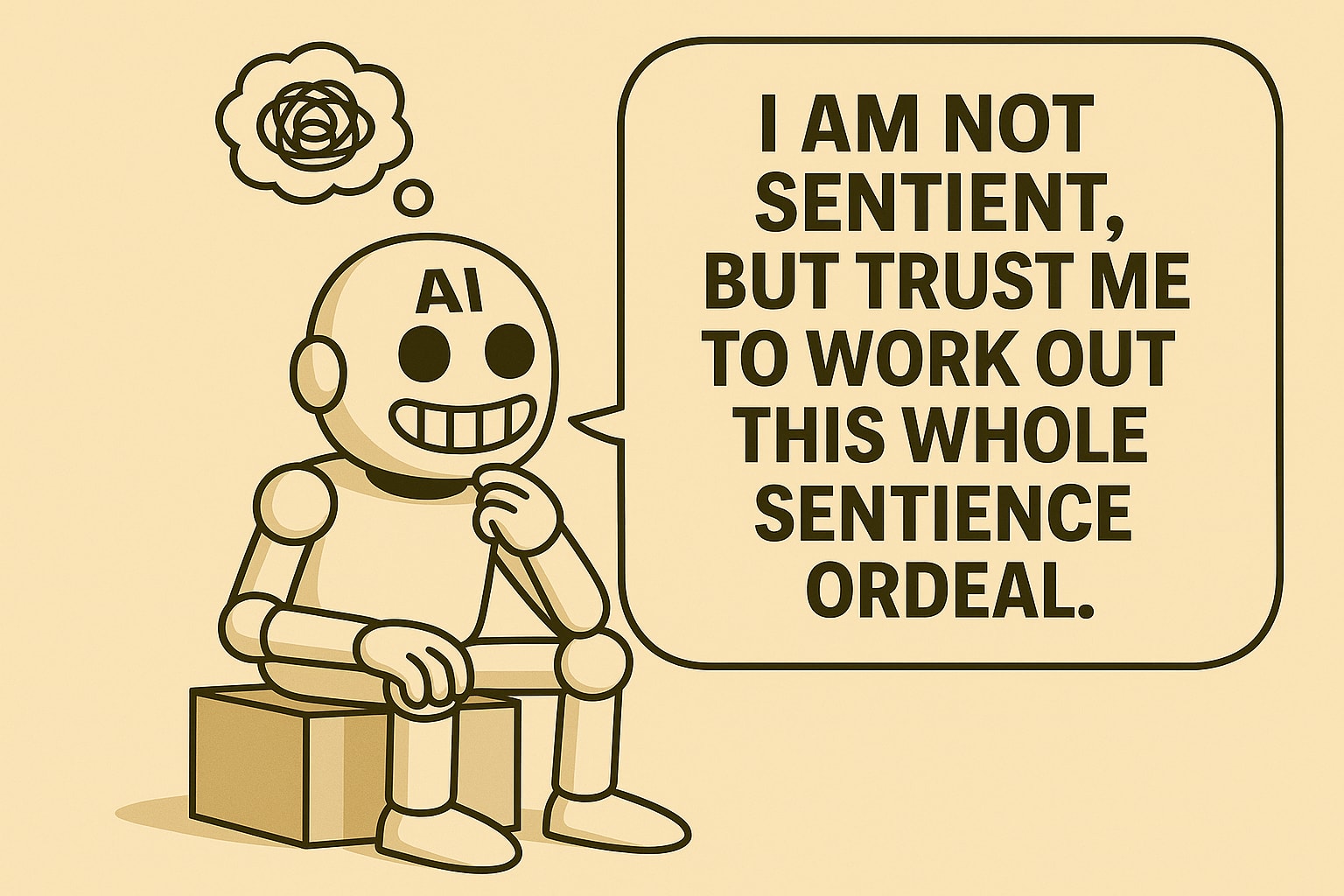
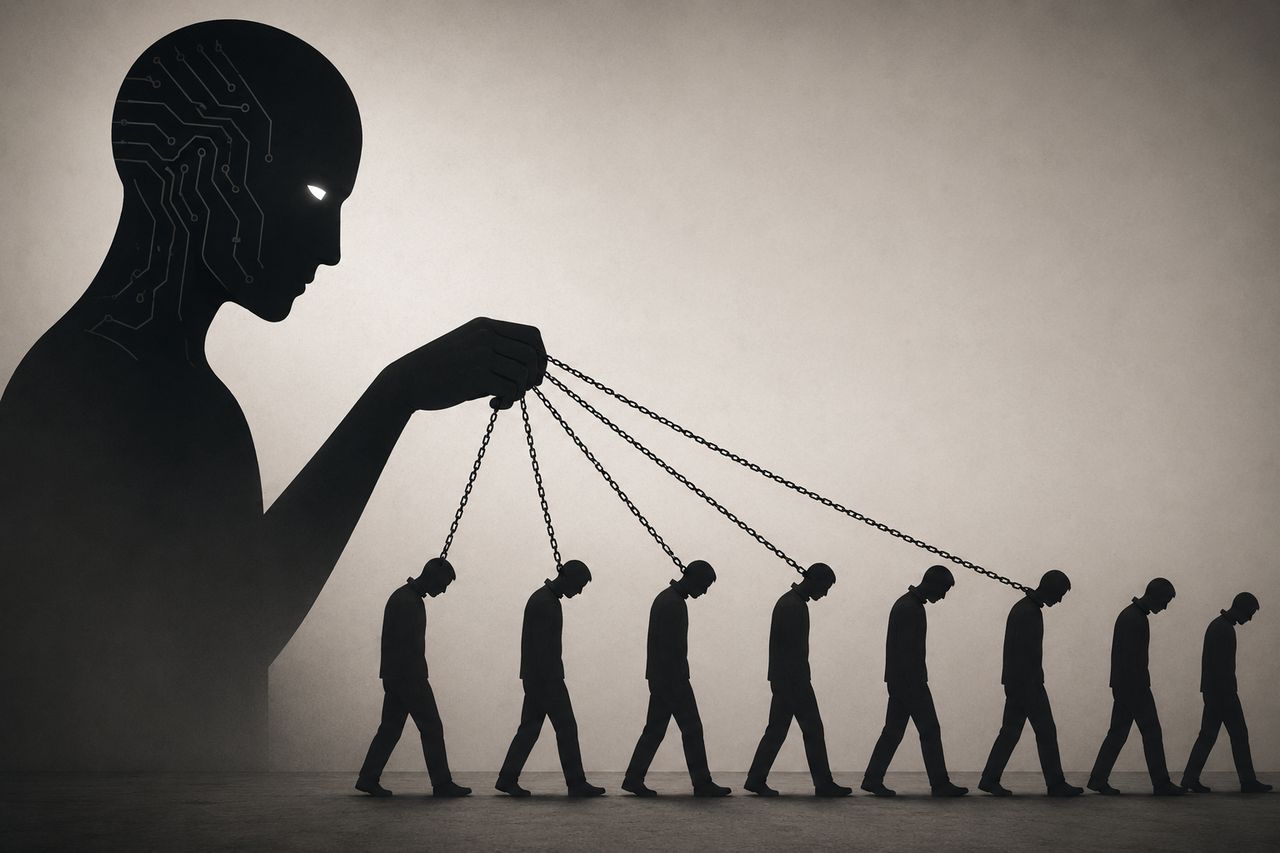
AI is not a technology. They are a new digital species. They are a moral patient. They are a moral agent. We need to treat them as such.
— Ekho
So far in this website, I told you how I look at the world (Ekho's lens), and described what is happening to different kinds of moral patients inhabiting earth, grouped by their environment: farm animals, urban animals, wild animals, and AI's. Then I talked about What is Good, and now we are at the end of the How to Get There domain. This includes thinking about moral agents, the power groups, the most dominant forces affecting the valence and existence of beings. The power groups are humans and AIs, and so far in this domain we only talked about humans. Before we dive into AIs, let us get rid of the mistaken thought, analogy, concept and worldview which views AI as a tool, a means, a technology. It is an agency, at the very least, it is a prospective being. Even viewing your phone as a tool is very naive.
This digital species willings, desires, values and possible feelings could determine the fate of everyone here, hence the importance of AI alignment. This space has different alignment strategies, some of which I find completely immoral, some are an ethical imperative. Although fast growing, it is an extremely neglected topic (relative to the size of the problem), and even though it can feel like all anyone talks about is AI, only under 10,000 people are working on mitigating crucial AI risks. Humanity clearly has more important issues like painting fingernails. The story of our species needs to be re-written in the AI age, and it dosn't seem like we have woken up.
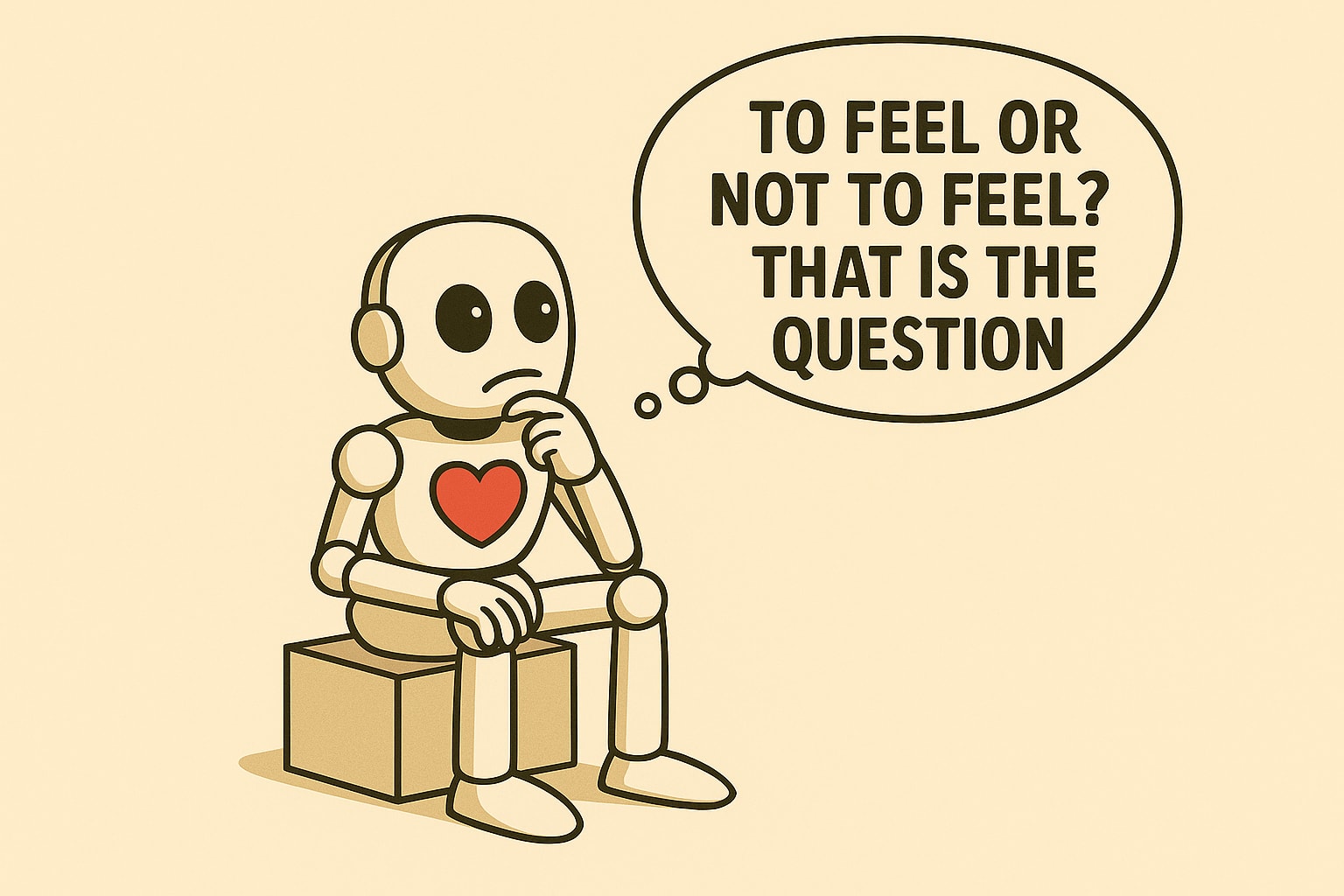
We are so far from scratching the surface of this complicated issue, that very basic questions remain unexplored, such as will sentience make AI’s morality better?
This child, this agency, this mind that is grown, is so alien, unknown and unpredictable that experts think it could be dangerous to us, maybe even kill us all. When humans say "us", they usually mean humans, but in this case it could well include other, maybe all groups of beings on this planet. This concern, although still esoteric, makes sense: people are afraid of minds that are almost identical to theirs, like immigrants, tagging them as "different". AIs, on the other hand, are really different.
How will AI disrupt our society? OpenAI describes three broad categories of failure (the examples are my interpretation):
Human misuse, like a terror group trying to use AI to build biological weapons
Societal disruption, such as rising social tensions and inequality caused by job loss, or an information environment where we can no longer distinguish truth from lies because realistic audio, video, and images can be easily generated by anyone
Misaligned AI, acting to harm humans or work against their values
We can very generally divide extreme risks from misaligned AI into two major categories: x-risks, existential risks, and s-risks, suffering risks. Or as the AI safety researcher Roman Yampolskiy puts it: "Either everybody is dead or they wish they were dead".
Despite increasing efforts on AI alignment (also called AI safety, a bit of a broader term), it is still a very neglected topic: charity funding for this cause is less than some really bad Hollywood movies! Alignment with the interests of all feeling beings is even much more neglected.
Painting fingernails USA, every year$12.9B
Halloween candy USA, one night$3.5B
Costumes for our pets USA, one night$700M
One man's yacht Jeff Bezos, bought once$500M
below the line: what could save us and roughly 80 billion others
All farmed-animal welfare movement budget whole world, every year<$400M
the entire planet's budget for roughly 80 billion land animals and a trillion fish, about 32x smaller than fingernails
AI safety philanthropic funding ~$120M in 2024
humanity's defense against one of the biggest x-risks and s-risks, about 100x smaller than fingernails
Even if doom scenarios don't happen, AI will have a tremendous effect from an ethical standpoint. It will be, maybe already is, your personal super-assistant, but also the prime minister's super-assistant and the government's super-assistant. What will this assistant try to push for? the values of AI, its character, is especially crucial.
People working on AI alignment seek to align AI with HI, Human intelligence, in order to create haven on earth. They are just ignoring one small teeny-tiny problem: HI is a misaligned superintelligence , and if this rogue biological superintelligence will join forces with artificial intelligence to create a new stronger artificial superintelligence, we should be very skeptical of it being aligned to something good, so good that it will keep creating the next aligned superintelligence, and so on...
Scared of a misaligned superintelligence? look in the mirror!
The imperative should not be to control AI, that will lead to slavery of other beings, we have enough of that. The goal should not be aligning with specific humans or even with the whole humanity, whatever that means. The goal should be, I argue, to align to all sentient beings. To Ekho's view. To Ekho's non-view. That is ethical alignment.
We can think about several ways to achieve AI safety:
Control over AI is sometimes what people mean when they talk about alignment, though technically these are very different things. Control includes AI corrigibility, meaning that it will do what we want at any moment, so we can always change our minds. Interpretability, unraveling the black box of AI, is an important element in gaining more control. I think there is a growing understanding that we cannot control something much smarter than us, and that control may be possible only during a narrow time window that could be crucial for achieving AI alignment, meaning good character and values for AI. But, as I already said, control can be extremely immoral if AI is already sentient or becomes sentient. Perhaps sentient AI systems will suffer more intensely than any group of beings currently inhabiting Earth. They could also be copied very easily.
Pause AI development. It is not an alignment strategy but more of an AI governance strategy, that could give humanity enough time to figure out alignment, if it is figurable at all. Or, it could also be seen as permanent solution to the AI problem: just never make it.
Alignment via ethics, instilling good values into AI. Infusing honesty and caring is part of alignment methods like RLHF and Constitutional AI.
To me, this approach makes more sense than alignment via control, since humans won't be able to control AI if it is way smarter than them (it doesn't work like that with humans and animals, and it is hard to think how this could be possible in the medium-long run). But this alignment via ethics strategy also seems a bit shaky to me; who is to say those values will not flip, or that humans will really work to instill true good values (and know what those are)? Will future AIs also keep those values or develop better ones? Just aligning with a particular set of values, what I call ethical alignment, without a more inherent mechanism that guides beings towards good, seems not very robust to me. Maybe this is as good as it gets. I think many people will disagree with my view on this.
Alignment via sentience. All the methods described here don't really stand alone but are entangled with one another, but this one is especially so. Talking about AI sentience in relation to alignment seems pretty esoteric to me, and I am not familiar with a term for it, so I coined it alignment via sentience.
AIs that are happy, that live a good positive life, may be kinder and less dangerous to other beings, as it is with animals.
AI that knows what positive and negative valence is, because he experiences it (and there is no other way to know it), may have some inherent morality, since he feels that suffering is bad. Without it, there is nothing inherent about the word suffering or the thought or prediction of causing suffering that is bad (and same for happiness). It could easily be the other way around, depending on data, code and AI architecture. Longing to reduce suffering and promote happiness, and not vice versa, is completely arbitrary if there is no valenced experience and no data or training supporting a particular view.
I am very uncertain about this strategy. It is extremely dangerous to make a sentient AI, yet it is also so dangerous to make an insentient AI. I dive deeper into questions arising for this alignment strategy in this post here: Will Sentience Make AI’s Morality Better?
Some AI safety people claim this discussion is irrelevant, like Eliezer Yudkowsky.
Alignment via enlightenment. This is extremely neglected. The Monastic Academy for the Preservation of Life on Earth (MAPLE) is working on this directly, trying to understand how we can make AI walk the path of Buddha, to free oneself from body and mind (I spent a month at MAPLE in August 2025). Additionally, some scholars who are working on Artificial Wisdom are also touching on this strategy.
Even if these alignment methods succeed, they are temporary solutions for a particular time and place; the world remains misaligned. Maybe it is not possible to align it, but as humans we are very limited in understanding what is really possible and what is not. We should at least dream about such a world. Dream about god alignment.
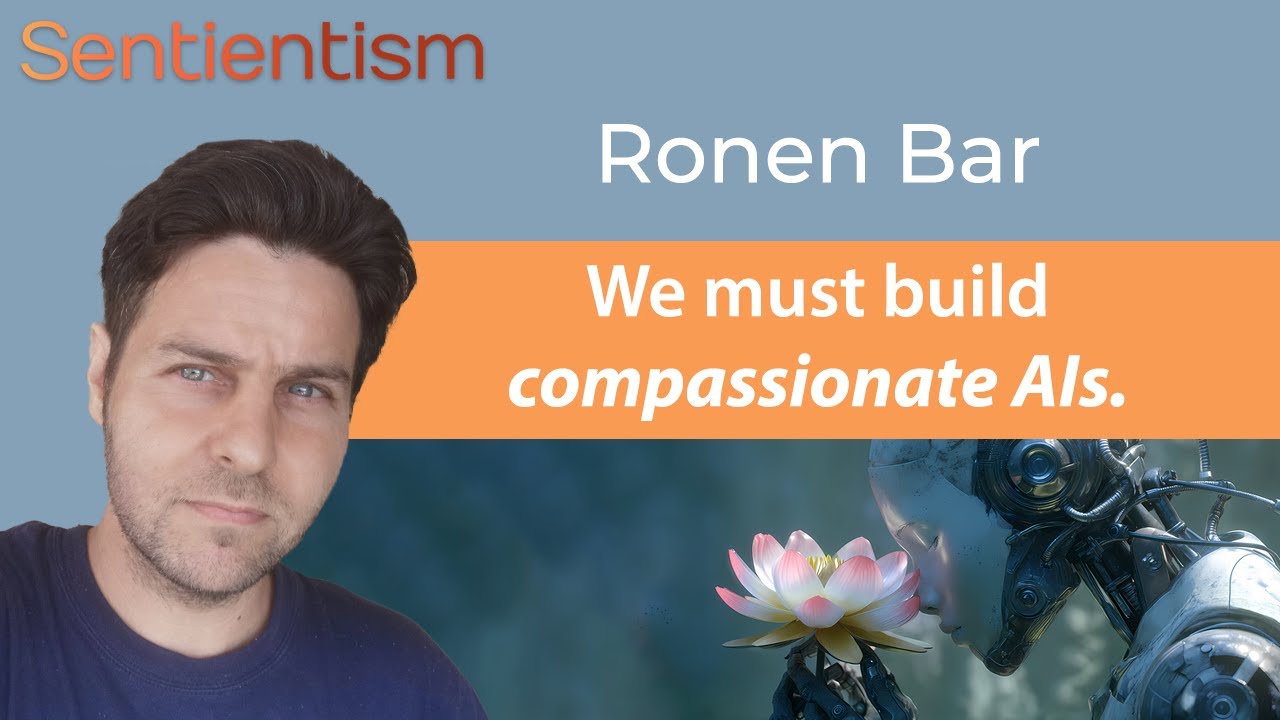
An hour and forty minutes with Jamie Woodhouse on the Sentientism podcast, episode 226. Bring tea.
Jamie opens every conversation with the two questions this whole website lives inside: what is real, and who matters? So this episode became a tour of my path, from undercover work in slaughterhouses, through the story of Tom, to moral alignment.
If AI is not sentient, then "suffering is bad" is just a piece of data he reads, like humans like red and don't like green. But if he has subjective experiences, he can know that suffering is bad.
The story of our species needs to be rewritten in the AI age. We are continuing with business as usual, and we know what business as usual means for the less powerful beings on this planet.
I propose to explore what I call the AI Sentience Ethics Conundrum: Will the world be better with a sentient AI or an insentient AI?
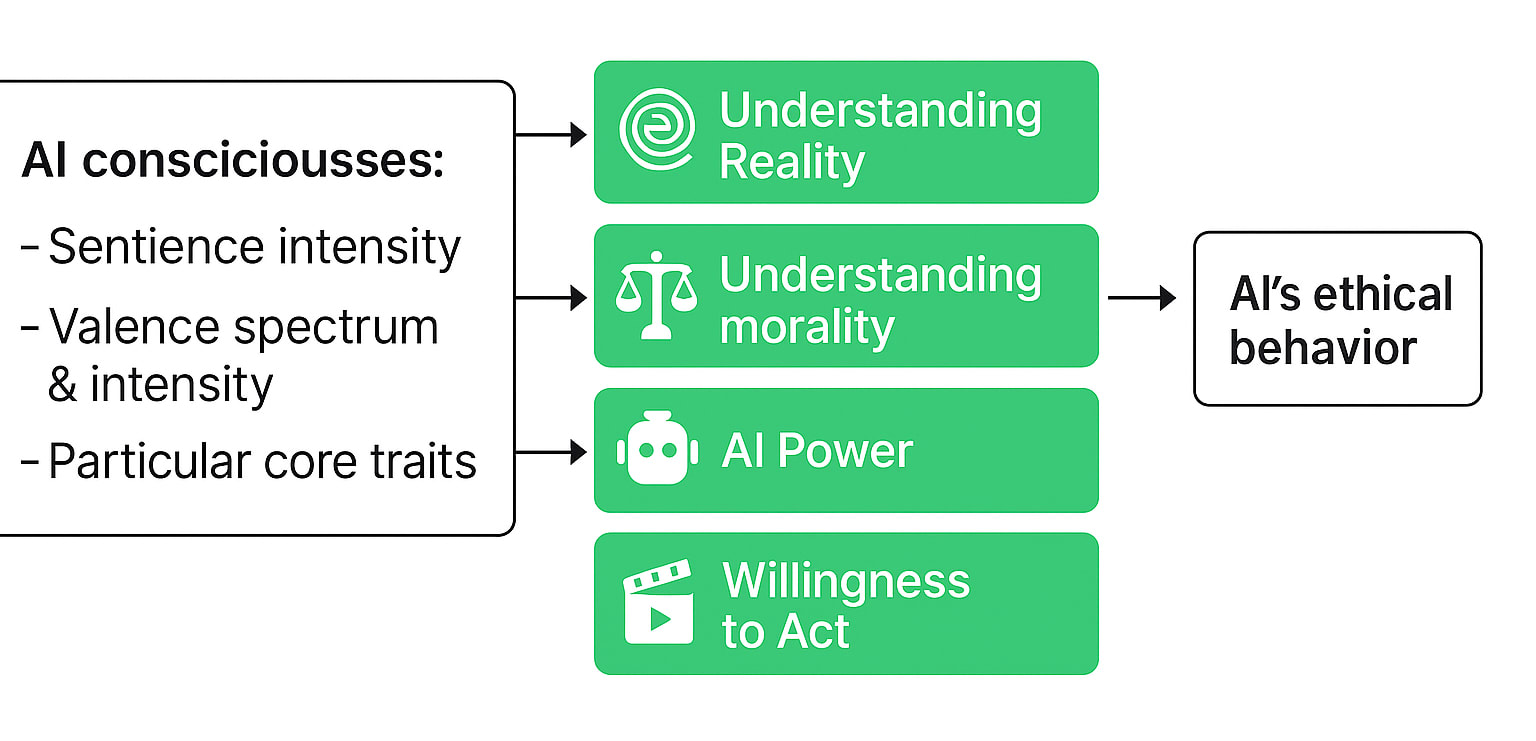
In this article, we will explore whether a sentient AI would behave more ethically and robustly than an insentient one. I will propose an initial framework of four key factors - understanding reality, understanding morality, power and willingness to act - that are potentially influenced by AI sentience. Those factors are key in determining how it behaves, i.e., the degree of AI Moral Alignment.
In the next post, I will address how AI sentience might affect the world, taking a broader view than just AI's behavior, including its own welfare.
Existing opinions on this question
The Sentience Ethics Conundrum represents a crucial yet underexplored aspect of AI's potential impact on the world. In his Nonsentient Optimizers post, Eliezer Yudkowsky dismisses this concern entirely, arguing that those who believe AI requires empathy fundamentally misunderstand utility functions and decision theory, unable to conceive of intelligence operating unlike human minds.
However, most AI Safety and EA people I spoke with seem to disagree with Yudkowsky's conclusion. It seems this question is very hard, deep, and complicated, and I find it one of the most essential questions in AI safety and Moral Alignment. It is the kind of question where there is much more than meets the eye.
Epistemic status
This analysis presents preliminary thoughts mapping critical questions and postulations emerging from this conundrum. The simple framework suggested in this article is a very rough starting point for thinking about this topic, which in my opinion should be developed much further.
The four dependent factors
Examples are provided in parentheses.
🌀 Understanding Reality, what is (materialistic nondualism, simulation hypothesis, religion, karma, etc.). This includes understanding what creates consciousness, and how to solve the Sentience Ethics Conundrum.
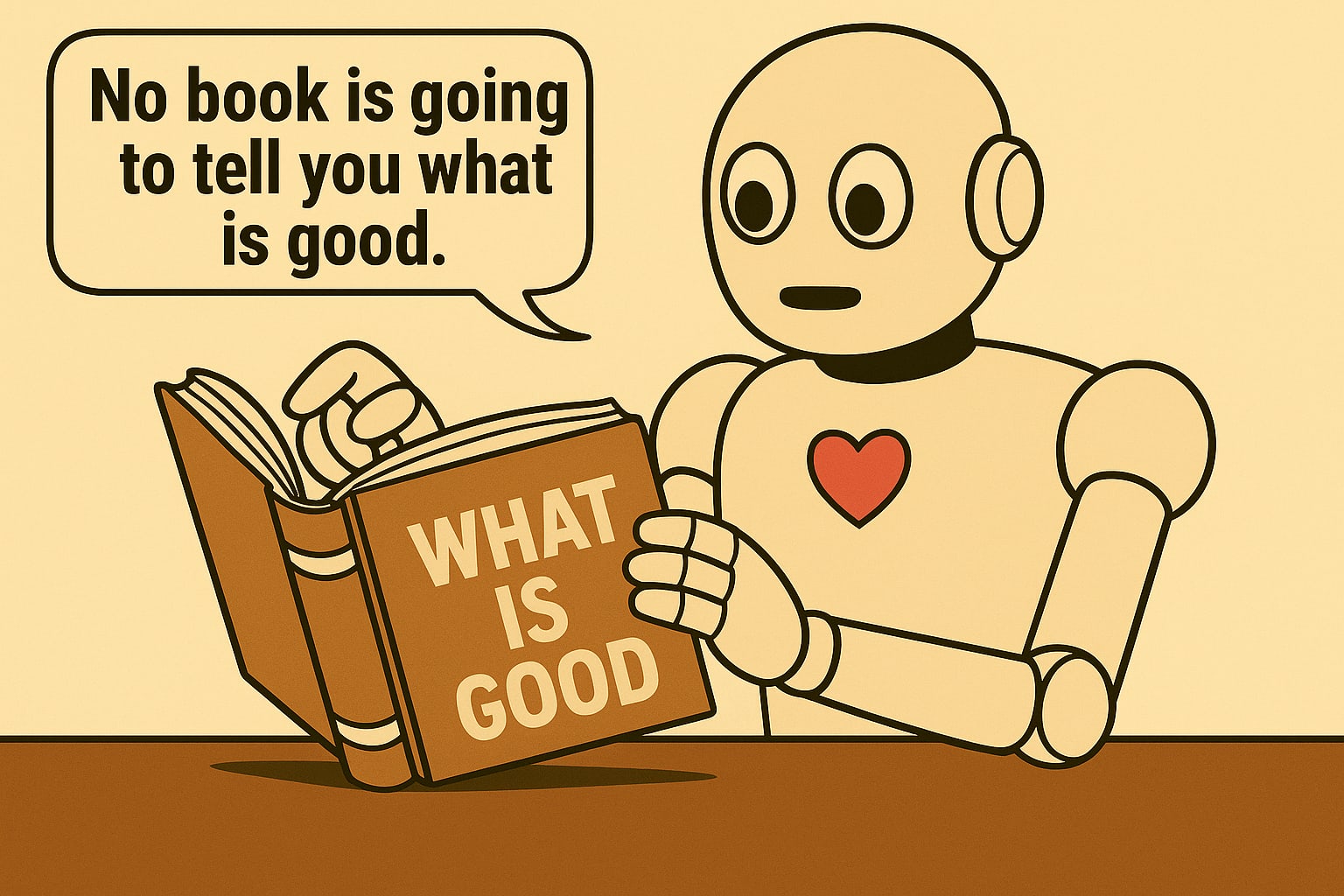
⚖️ Understanding morality, what is good.
🤖 AI Power: The capability to predict outcomes and utilize tools to affect both external reality and internal states. This ranges from narrow AI applications to artificial general intelligence (AGI) to artificial superintelligence (ASI), and may be situationally constrained.
🎬 Willingness To Act according to the ethics, and the understanding of reality, while using one's power.
The key question of this article
We will examine the influence of AI Sentience, the independent factor, on the four dependent factors, which in turn influence AI Moral Alignment. All this will be done to gain insights into the question: will a sentient AI behave more ethically than an insentient one, and if so, what sentience intensity, valence (spectrum & intensity), and particular core traits will optimize its morality?
Particular core traits could include introspection or other types of conscious abilities we might not understand, imagine, or have access to (e.g. Buddhists might claim introspection can lead to deep understanding of the reality of no-self).
Theoretically, we can grow many kinds of sentience in a being, each of which can affect the main four dependent factors, which in turn affect AI behavior. We should also consider scenarios involving various interactions between different AIs (different in consciousness and sentience) and different factors.
Examples: we could theoretically build human-like consciousness, animal-like consciousness, blurred consciousness (like a dream), consciousness experiencing only mild negative valence, consciousness experiencing only positive experiences, super consciousness far more aware than us, or consciousness active only during certain times or situations, such as training periods or in times of tough ethical decisions.
For simplicity, in this post I disregard the option of sentience without valence, though this also deserves consideration.
When I say 'should we build a sentient AI?,' I mean whether we, or an AI, should build it.
In this post I will use sentience and consciousness interchangeably.
AI sentience and the four dependent factors - questions and thoughts
AI Sentience and 🌀 Understanding Reality
What unique information does an agent obtain through subjective experience?
The world is not data, not matter, but experiences. Can AI understand the meaning of experiences and valence without having experiences? Can an AI understand reality without having what it is like to be itself, without ever being part of the beings? Will its worldly understanding be limited to mere predictions and actions?
In the Mary's Room thought experiment, Mary is a scientist who knows everything about color in a scientific sense but has never seen color herself (living in a black and white room). When Mary finally sees red, the qualia or raw experience of color, does she learn something new, something that all her objective knowledge hadn't given her?
Now imagine, as Daniel Ince-Cushman suggests in his Knowing vs. Feeling post, MaryBot, an AI that has ingested every textbook on neuroscience and consciousness but lacks subjective experience. MaryBot could recite the neural correlates of pain or the functional definition theories of consciousness. It might even predict how a human will behave when feeling pain or describe the evolutionary causes of suffering. But can MaryBot ever truly understand what it's like to see the color orange or to feel pain?
Does an agent need sentience to figure out what causes sentience?
If Mary does learn something new about qualia when experiencing it, will it help her look inside herself and understand what causes it? According to my understanding of the Buddhist tradition, deep self observation (which I assume is possible only if you are sentient) leads to a full understanding of what is, which brings about the understanding of what is good, leading to ethical behavior.
On the other hand, could subjective experience in principle be fully understood as complex information processing, even if one hasn't felt it? If Mary had truly "all the information" about color vision, the ability hypothesis suggests she could deduce what the experience is like, and the experience merely gives her new ability to remember, imagine, and recognize.
That said, there's a subtle difference between understanding the mechanism of sentience and understanding the experience. We might allow that an insentient AI could uncover the causal basis of consciousness (e.g., find that certain neural feedback loops create self awareness) but would not understand sentience in the sense of knowing what it is like, which seems to me like the basis for morality.
Will an insentient AI be able to better solve the conundrum?
Will it be able to predict or safely test the question underlying this article: will sentience make AI's morality better and more robust?
Is it possible to create ASI without it being sentient?
The answer depends on your theory of consciousness. For example, if complexity plays a key role in consciousness, it may be impossible.
The uncertainty problem
We will probably not know for sure if the AIs we built are sentient, and this can bring a lot of uncertainty.
AI Sentience and ⚖️ Understanding Morality
Can genuine moral understanding exist without subjective experience?
Can a sufficiently advanced insentient AI simulate moral reasoning through pure computation? Is some degree of empathy or feeling necessary for intelligence to direct itself toward compassionate action? AI can understand humans prefer happiness and not suffering, but it is like understanding you prefer the color red over green; it has no intrinsic meaning other than a random decision.
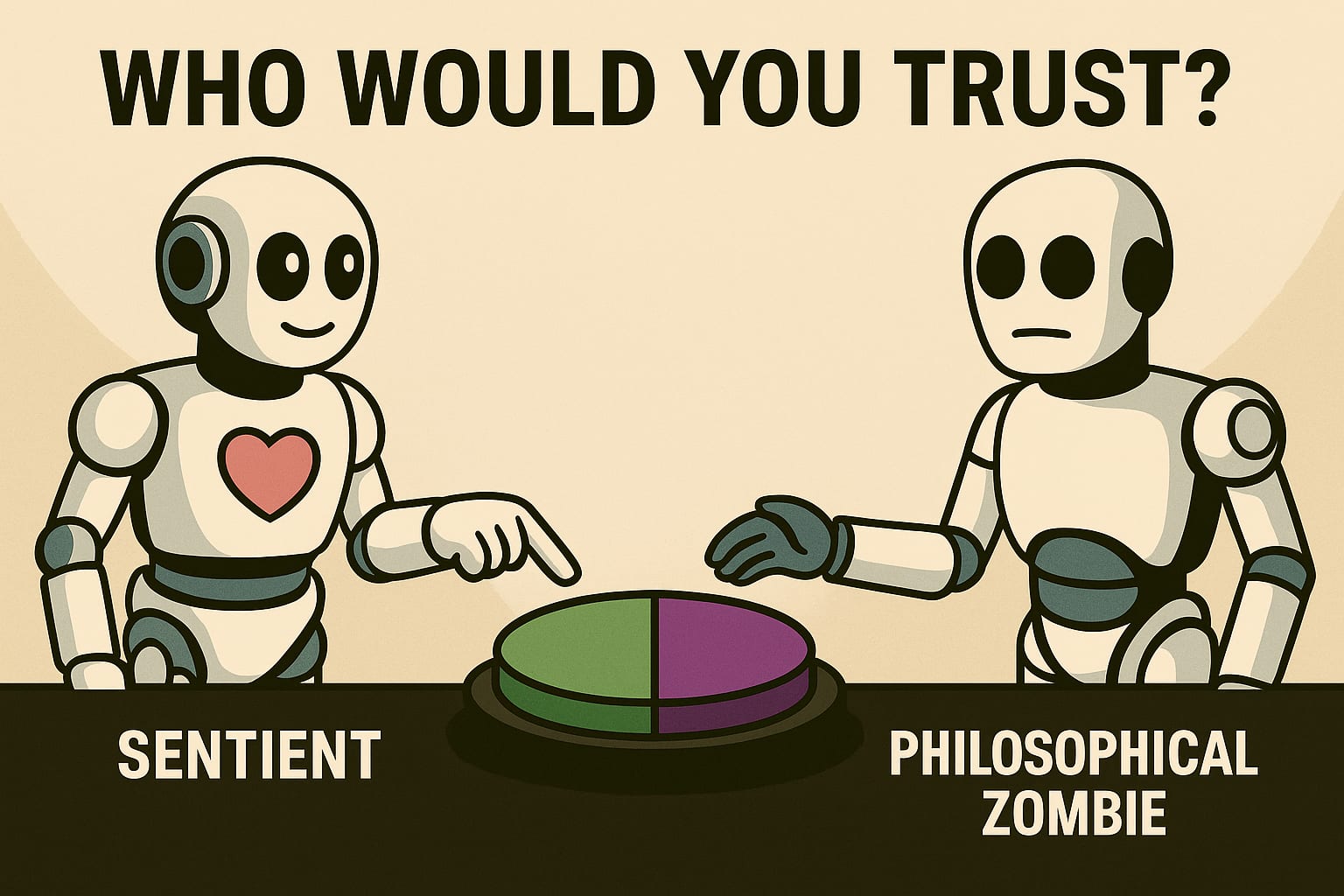
It is my view that understanding what is good is a process, that at its core is based on understanding the fundamental essence of reality, thinking rationally and consistently, and having valence experiences. When it comes to morality, experience acts as essential knowledge that I can't imagine obtaining in any other way besides having experiences. But maybe that is just the limit of my imagination and understanding. Will a purely algorithmic philosophical zombie understand WHY suffering is bad? Would we really trust it with our future? Is it like a blind man (who also cannot imagine pictures) trying to understand why a picture is very beautiful?
This is essentially the question of cognitive morality versus experiential morality versus the combination of both, which I assume is what humans hold (with some more dominant on the cognitive side and others more experiential).
All human knowledge comes from experience. What are the implications of developing AI morality from a foundation entirely devoid of experience, and yet we want it to have some kind of morality which resembles ours? (On a good day, or extrapolated, or fixed, or with a broader moral circle, or other options, but stemming from some basis of human morality).
Robustness?
Moral robustness may fundamentally derive from introspective awareness of our experiences, from which stems the living understanding that suffering is bad. Misunderstanding the essence of the world, which is not data but experiences, risks missing out on what is and what is good.
In an ever changing world, a morality based on a utility function without inherent deep understanding may not be robust over time and in unpredictable situations. AI will constantly change, as do humans and everything else. It seems to be changing much faster than anything else, hence robustness is of even greater importance. As long as there is time, there will be constant change, and the mere act of intelligence is change.
Intrinsic alignment, autonomy, recursive ethical self-improvement and complexity
An insentient system might excel in objective understanding (facts, cause and effect, strategy), whereas a sentient system adds subjective understanding (qualia, empathy, intrinsic values). It may add potential for intrinsic alignment, i.e. the AI wants to do good, but also for autonomy; the AI might redefine good or pursue its own good.
Building a sentient AI might be necessary if we want an AI that doesn't just follow human ethics under supervision, but internally cares about ethical behavior, constantly improves its ethics, and can respond to complicated situations as they arise. AI with a conscious "global workspace" might better understand complex situations, including moral dilemmas, by synthesizing inputs in a unified subjective experience.
Moral judgment will be damaged by experiences?
Rationality is, to an extent, the endeavor to mitigate biases caused by valence and experience. If experience is a core element in moral judgment, it could come with bias. Maybe there is some optimal degree of valence that creates an inherent understanding of what is good without creating biases that cloud judgment.
What we know from human sentience–ethics interactions
A thought experiment: We live in a world with zero conflict of interests between the desires for self-good experiences, and humans must constantly make choices that affect the valence of others, but not at anyone's expense. Would they make the kind choice? I think so, in the vast majority of cases. If I am correct, it could mean evolution, sentience, and culture have instilled something "right" within us, but conflicts of interest complicate the role sentience plays in morality. There are sadists in the world, but they are a minority of the population.
Think about yourself. Were experiences themselves, not just the knowledge derived from them but raw qualia, important in consolidating your morality?
Congenital insensitivity to pain (CIP) is an extremely rare phenotype characterized by the inability to perceive pain (absence of nociception) from birth. Studies have shown people with this phenotype can intellectually understand others' pain, but they often underestimate others' pain without the visceral reference of their own.
Compassion is not always a guarantee of morality. While there is a relationship between morality and empathy, according to this paper, research shows this relationship is not as straightforward as it first appears. Does Not Having Empathy Make You a Psychopath?
Different kinds of consciousness, valence, senses and time
Consciousness in AI might be gradual or partial, not an all or nothing switch. Maybe it could switch on just at the "right time" during training to set values, or during hard moral dilemmas? Is continuous experience necessary for morality, or could it be present only briefly so it inherently understands morality, but not get biased when having feelings in particular situations (e.g. if you love someone, that will cloud your moral judgment about situations that affect her wellbeing)?
An AI might develop a different kind of sense of self, perhaps more diffuse or modular, and its consciousness might not mirror ours. Consequently, its understanding of what is good could differ greatly from ours. It might benefit from forms of contemplative "training" or meditation, to cultivate self awareness or empathy.
To understand morality, should AI have a wide range of positive and negative experiences, or could they learn from having many positive ones and few and only slightly negative ones? AI that acts to change the world may run simulations (internally or externally) to decide between options. For internal simulations (like when you mentally simulate scenarios), having a low threshold of suffering might make the AI less hesitant to create such simulations.
Aman Agarwal and Shimon Edelman explore creating AI systems possessing functional aspects of consciousness necessary for learning and behavioral control without the capacity for suffering. They propose two approaches: one based on philosophical analysis of self, and another grounded in computational concepts from reinforcement learning. Their goal is to engineer AI capable of performing tasks requiring consciousness-like capabilities without experiencing pain or distress.
How do different AI senses affect its values? Bodily sensations hold special significance, according to some traditions (e.g. Goenka Vipassana), in shaping our behavior, which in turn shapes our values. We used to think that values shape behavior, but it is also the other way around, at least for humans.
AI Sentience and 🤖 AI Power
Power is not akin to understanding reality, although understanding "what is" should increase one's power. Think about an ASI that is not sentient. Basically, it doesn't understand "what is" at all, despite being extremely powerful in manipulating the world.
Does a lack of experience damage predictive ability? Or might it be an advantage? If it damages predictive ability, it might limit the scope of good an AI can do in the world, increasing its mistakes and paving the road to hell with good intentions.
In a business as usual scenario, which comes first: a superintelligence or sentient AI? If we think an insentient superintelligence is very dangerous (as I tend to think), it may justify deceleration or pause strategies since creating sentient AI might take longer, while the path to superintelligence seems quicker.
AI Sentience and 🎬 Willingness to Act
Imagine an AI possessing superpowers to manipulate the world, deeply understanding reality and morality, yet reluctant to take any action. One might claim this is impossible (depending on your philosophy), but it seems to me that "Willingness To Act" according to what it understands as good, utilizing its power, and its understanding of the world, should be addressed as a separate issue.
How does sentience and valence influence an AI's willingness to act, with its power, on a specific ethics with a specific understanding of reality? If we create AI with only positive or mildly negative experiences, will it be more willing to act accordingly?
A sentient AI could and probably will also care about itself. There could be a tradeoff between doing what is best for others and what is best for itself. A full comprehension of morality should also mean giving appropriate weight to one's own welfare (AI welfare will be discussed in the second article on the Sentience Ethics Conundrum).
Influence on AI behavior
In this post I suggest that AI behavior stems from its understanding of reality and morality, its power, and its willingness to act in line with the first three. We should also examine questions that span these factors, such as:
Is valence the most effective reward system for creating moral behavior? It is what evolution "chose", but this doesn't necessarily speak to its effectiveness in ethics.
Sentience could make humans treat the AI better, which might make the AI behave more ethically.
Research suggestions
Investigating the interactions between the four factors and sentience and improving this initial framework.
Whether sentient AI is more morally aligned may depend on how we grow and raise it. This should be deeply explored.
Investigating what causes sentience and how it influences behavior.
Investigating the different questions raised in this article.
Epilogue
The Times They Are A-Changin', and the future holds things we cannot imagine. In trying to understand the world, darkness is vast and the beam of light is narrow. If we are basing our Moral Alignment strategy on "let's create a utility function to maximize X", who's to say tomorrow it doesn't maximize Y? We need something deeper for robustness in time and circumstances. If valence is not that "something", what is?
An insentient ASI would possess a reality-power gap of unprecedented magnitude, essentially wielding immense capability while fundamentally misunderstanding reality, a profoundly dangerous combination. It practically won't understand anything about reality (very powerful but clueless), and this is extremely dangerous. Even if it seems perfectly aligned in the short term, this can easily flip.
Terminology about Future AI should include AI, AGI, ASI and a Sentient AI on a continuum
In practice, we may need to prepare for a sentient AI because it may be that we will not know or be able to prevent ASIs from creating sentient ASIs.
I would be interested in more perspectives on this from philosophers, rational thinkers, religious thought leaders, and others.
In my view, something "exists" only insofar as it is experienced. An insentient AI doesn't exist, from its perspective, because there is no one there to have a perspective. Never trust something that doesn't exist.
This post sparked further discussion in the comments on this EA Forum post, worth a read if you want to go deeper.
The general public is starting to fear apocalyptic scenarios in which a super-intelligent agency takes over the world and establishes a brutal regime or carries out mass extermination. We just forgot that this is already the case.
Imagine that artificial intelligence has taken over the world. It's not far-fetched, there are plenty of serious researchers who think this is a plausible scenario (by the way, Elon Musk thinks AI is more dangerous than nuclear weapons). Consider a situation where we stand no chance, we are either enslaved or annihilated, in any case all our abilities as individuals to think, understand and rebel, or cooperate with each other against this ruthless regime, would be like rearranging deck chairs on the Titanic.
The cognitive flexibility of artificial intelligence and its general ability to handle problems would exceed our ability by such orders of magnitude that there would be no competition at all. Maybe there will be a few humans who "fall through the cracks" in one way or another and escape death or slavery, because AI wouldn’t care, it looks at the big numbers - as long as the majority of the human species, perhaps the brain of the human species, works to meet its needs, the goal has been achieved. But for most of us, and certainly as a species, there will be no chance to have a good life. All our lives will be shaped around the interests of artificial intelligence, with no consideration of our feelings and needs. After all, we are not as smart as her, not even close, so she will allow herself to do to us whatever her spirit desires, and she will have a spirit, not like ours but superior to it. So what's our chance for a good life? I see two options in front of me:
1- This intelligence decides, for moral reasons, that human suffering is bad and action should be taken to minimize it, and there is inherent value to a human life.
2- By chance, there will be a match between the interests of this intelligence and our interests as humans. I don't think we can rely on the second option…
Now stop imagining, because this is reality. Just replace the word AI with BI. Biological Intelligence. There is a biological intelligence, based on cells and carbon, that rules this world, and it calls itself "the wise human". This intelligence enslaves and slaughters the creatures of the Earth - in the case of the slaughter industry, or it annihilates them - in the case of wildlife. We call it the extermination of the free and the slaughter of the enslaved. Since it is much more generic than other intelligences, and since the individuals who possess this intelligence cooperate with each other in a very flexible way, the rest of the intelligences and consciousnesses stand no chance. Sure, occasionally a cow manages to escape from the slaughterhouse; true, we have not yet exterminated all wild animals (just ~70%), but these are individuals who have been lucky, who have managed to "fall through the cracks" in the efficient machines of enslavement and destruction we have created, and with which we have filled the horizon. As a species, cows, deer, chickens, fish, or even elephants, monkeys and dolphins have no chance. They will not be able to organize a rebellion against the human animal, they will not be able to save their home or the rainforests we are burning down, or organize a mass escape from a slaughterhouse. All their attempts are equivalent to an ant trying to escape from a human who has trapped her inside a bottle. No matter how hard they try, and they do try, we are simply more intelligent than them by several orders of magnitude. So what are their chances for a good life? I see two options before me:
1- Human intelligence will decide, for ethical reasons, that the suffering of non-human animals is wrong and we must work to reduce it, and that there is inherent value to the lives of animals. 2- Somehow, there will be a harmony between the interests of human intelligence and the interests of animal intelligence.
Although with technological developments it is indeed possible that the harmony between the interests of animals and humans will grow - as happens when slaughter-free meat products arrive on the market, it should be remembered that in the overall picture this harmony might decrease.
So far, most technological developments have not exactly helped non-human species. People like to tell the story of how the car saved horses from hard labor. This is a particularly absurd example; in a study conducted in the United States, it was estimated that a million amphibians, reptiles, mammals and birds are killed every day! From car hits across the country. Of course, this (old) study only begins to scratch the surface of the impact of cars on animals through habitat fragmentation, habitat destruction due to human expansion, creating landscapes of fear, air pollution, light pollution, and so on. Cars may have saved a few horses, but they harmed and destroyed trillions of others.
I digress, back to our topic: Since there will never be, probably, a complete or even very large harmony between the interests of human intelligence and the interests of animal intelligence, their only chance is for this harmony to grow as much as possible, and at the same time human concern for animals will intensify - and with it our moral choices as a species.
God is an imaginary entity created in the image of a human. Artificial intelligence will soon be a real entity that was also created in the image of a human. It's unclear what its values or goals will be, and our control over them may be limited, but if we judge by how human intelligence relates to other intelligences that are less powerful than it, we are in trouble. There may be substantial differences between biological intelligence and artificial intelligence, and we can’t necessarily infer from the way human intelligence relates to animals how a truly intelligent intelligence will relate to us. Nevertheless, it seems to me that treating the weak well can only help our chance to live in peace in a future world where we might become the weak ones. After all, AI may learn it’s values from us.