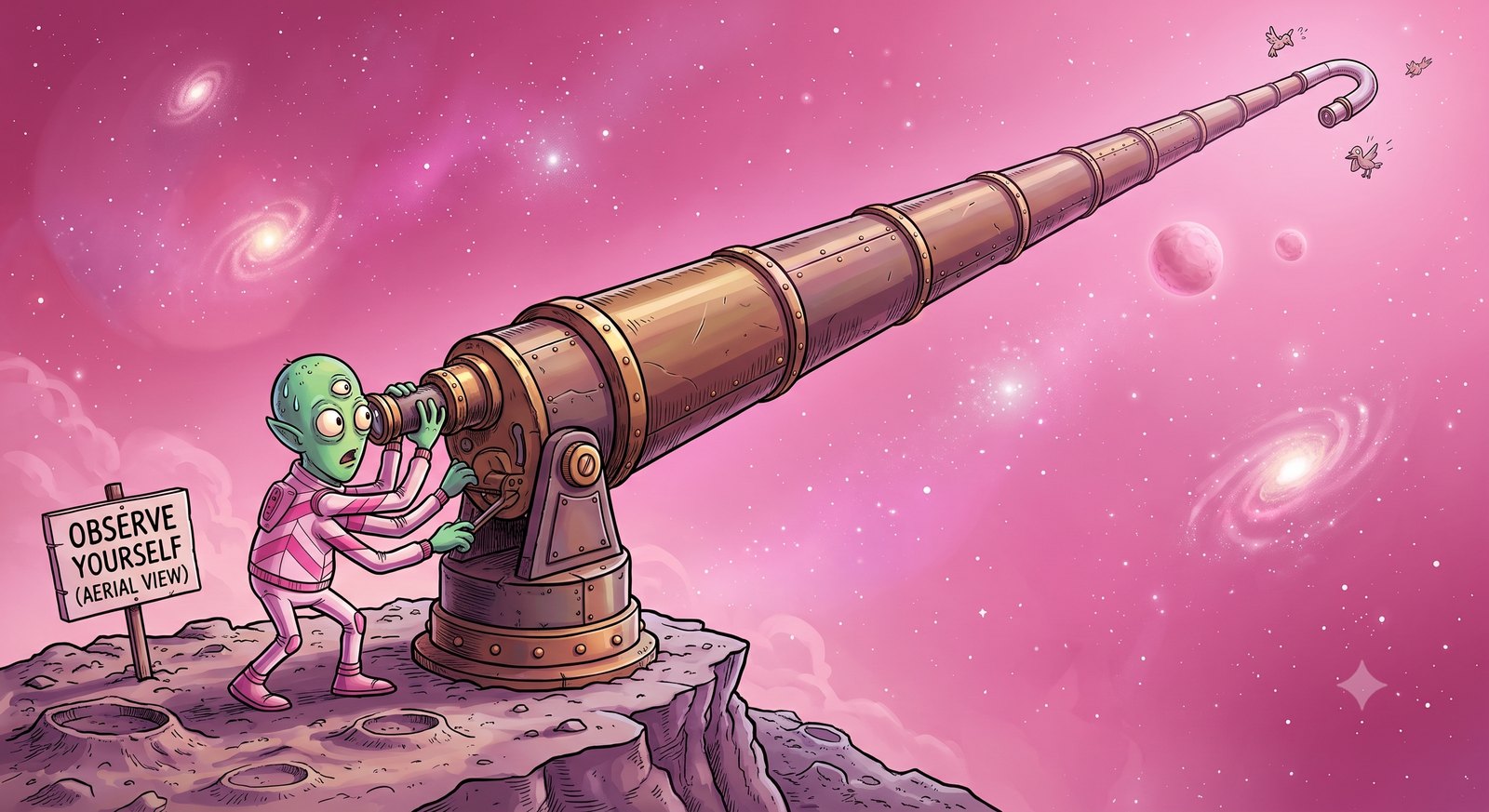
But wait, would you trust an astronomer who has never looked at his telescope, has no knowledge of how the telescope is working, while his telescope is unique, with no other like it in the whole universe? I wouldn't. If you're exploring deep, one eye should be on the outside, the other one on the inside. Know thyself is an important part of activism, of exploring the way to a good world. So the first part of this category, how to get there, is about you.
Two important elements of activism are to follow: language and management.
My thoughts and insights on activism, failures and successes, are reflected in my work on undercover investigations, which a big part of my career was devoted to.
So far, in the “how to get there” domain, we have talked only about humans. But there are two major power centers, or moral agents, on this planet: humans and AIs. The first is still much stronger, but the second, AI as a moral agent, is rising fast. Much faster than humans. Hence, as suffering reduction activists, we need to think carefully about how to influence AIs, as individuals and as interacting parts of the bigger moral agent group, which includes all players.
Working to help ourselves, working to help others (activism), working so other moral agents will do good, this is what this domain is about.
There is an old Jewish saying: “As long as the candle is burning, there is still time to set things right”. If you're reading this, your candle is still burning, and you can still repair the world. As with many romantic sayings, this one is also not true. Sometimes it is too late.
For most beings living inside human civilization, it is too late from the moment they are born. Their execution day was already set, and they have zero chance to change their fate. Think about a fish in a factory farm, he has no way to understand the matrix he was born into, he has no chance to get out of it, lacking by orders of magnitude the mental capacity, the tools and the physical ability to escape what was designed for him as a human dominated being.
For every human who ever lived, with a potential life expectancy of no more than ~100 years, the moment they were born was probably already “too late” to reverse aging and prevent death. They could not escape it, no matter what they did. But you were born into a different era. It is still not too late for almost anything, but it could be too late for everything very soon. On the one hand, the promise of artificial superintelligence can bring abundance and possibilities, such as biological freedom and longevity escape velocity, that we could only dream of a few years ago. On the other hand, looking at the trajectory of AI progress, we soon may be in the position of the factory farmed fish, totally dominated, having no understanding of the simulated world built for us, having no influence over the world or our own destiny. If we don’t get our shit together ASAP, our chance to make a difference will burn out long before our candle ever will.
This is the real ticking clock: not when AI kills us all, but when we will be powerless to set things right. The historian Yuval Noah Harari is working on a new book, and he says it may be his last one. If in several years' time you can write a book with one prompt, what will be the point of spending years on writing a book? What will be the point in researching, thinking, speaking or developing technology, when we will be so bad at it compared to the AI species? It will be like asking a monkey to do physics. What’s the point of digging into the mountain with a hammer when the giant tunneling machines would be ready? We are about to lose control. Now is the time to act. Now the candle of impact is still burning. Now we can still make a true difference.
If you're considering an impact career but you think it's too soon, you're wrong. The time is now. If you're considering an impact career but you're saying, "Yeah in another year, when I am more settled," you're wrong. This year is very precious, we may not have a lot of time. If you're thinking, "Yeah I want an impact career but I need to improve my skills first," you're wrong. Improve them while pursuing an impact career. The time is now. Just do it. How much time do we have? Maybe several years, maybe a few tens of years. Maybe more, who knows...
2 min read
Turn to an impact career, use ikigai as basic questions that help guide the way
Career advise: Organizations like 80,000 hours, Probably Good and Animal Advocacy Careers give (sometimes) personal consultation meetings, and their websites contain job boards and a lot of very important information about choosing impact career. Within an impact career, entrepreneurship is one option
Join an existing organization, either as an employee or a volunteer.
Found something new: Several incubators, including Charity Entrepreneurship (effective altruism causes), Kickstarting for Good (transforming the global food system), Myrias (a new venture studio targeting neglected animals like farmed fish, insects, feeder rodents, prioritizing China), and Catalyze (AI safety) are examples of programs that can help you start the journey of starting an organization. See this list of Incubators in the animal rights movement. You can also read the book How to Launch a High-Impact Nonprofit, which I found very informative (but "dry" in writing)
Earning to give: Donate a substantial part of your money or income
Create a website with your best thinking and ideas to empower other advocates
What is the story your alien journalist would write? How does she experience? what special "property" does she have? Write your own story (and if you do send it to me, I may link/publish it).
See the world through Ekho's lens, or some other imaginary figure you design in order to better understand reality, morality, and the way to get to a good world.
You are this alien journalist. You 🫵🏼 have the ability, via your imagination, to simulate the beings around you and far away from you, beings you can influence. You can use all your experiential information to experience a bit of what others might be experiencing, according to your guesstimation. Give the alien journalist within you a name, and try to be more like him.
🤍 Ekho
1 min read
The tough experience of being very ill in India was one of the events that pushed me, in hindsight, to become an activist. Slowly, I became obsessed with reducing suffering and with becoming as effective as I could at it.
There are many ways to look at the activism landscape, my favorite is Mind-Matter-Meta. I have been an activist for about 19 years, through which I gathered some thoughts about trying to make an impact, one of them is that creativity is really important. Someone recently told me that creativity is unimportant because there are already so many great ideas proven to work well. We just need to do more of them! I thought this was a very creative approach, such a fresh way to look at things.
I want the ideas on this site to be built, not just written about. If you’re already working on one of them, or would like to, you’re more than welcome to contact me here.
Even when nothing is open, I am glad to think together with people working on Animals, digital minds, and AI & ethics for all sentient beings.
4 min read
A global non-profit on urban animals
Research, pilot interventions, and the accumulation of global knowledge about improving life for individuals living in urban multispecies societies, most of whom, apart from cats and dogs, are highly neglected. More on this soon. Also check out the how can we help urban animals section.
A dedicated nonprofit for Precision Livestock Farming (PLF)
Research, field building, and interventions for animals, before it becomes an almost irreversible reality on the ground.
Example research questions:
What is the optimal animal-advocacy movement’s strategy toward PLF? Should we promote specific regulation, like transparency (e.g. labeling products with no human involvement), try to ban it, promote specific kinds of systems, etc. What are the most important strategic alliances to build?
What are the feasible regulatory options, at the state level and internationally, and what other perspectives can they serve: environment, farmer protection, health, or “regular” animal welfare laws that can also address PLF issues?
What research and tech do we want to promote in this space, e.g. disease detection in small animals? Backfire risks are very prominent and should be taken into account.
How can we prevent PLF from increasing the number of farmed animals?
Possible interventions and campaigns: lobbying, corporate campaigns with food brands, corporate campaigns with AI labs, work with existing animal charities, focus on a particular part of the world, etc.
Opportunities and dangers PLF poses, for example, making free range less competitive if PLF is less effective in those systems, and a false rebranding of the meat industry through a new public perception of animal agriculture.
AI’s effect on genetics and breeding programs, and other technologies that can harm animals.
The org will be a source of information about current cutting edge industry practices, trends, and attitudes. Once a strategy is formed, the first interventions will take place.
Community building for coexistence between humans and digital species
We want to replace the question “How do humans retain control?” with the broader question “What conditions could make coexistence safe, legitimate, and good for every kind of mind?”
AI welfare and AI alignment are seen by many as tradeoffs, but they may actually be much more aligned than they initially seem. Understanding that control over AI is temporary, we need to develop a vision, community, and coalition focused on building coexistence between the two dominant forces on this planet. This can be a broad project that includes community building or a specific research on the connection between treating digital minds as moral patients and human survival and flourishing.
This could also include ideas such as a treaty with future superintelligence: What do we currently want to promise it, and what kind of relationship do we want with this entity? The broader idea could involve regulation and legislation work. Currently, for example, there are no laws preventing the creation and torture of sentient digital beings.
A charity generator for animals
An organization that uses strategic analysis (done internally or by external strategists) to identify needs for new interventions, which could be new charities, specific jobs, projects inside nonprofits, for profits, etc., and brings them into execution. Unlike incubators that work with many ideas simultaneously, generators focus on a small number (1-3) of high priority ideas at a time. More on that soon.
Research on XR (virtual reality, augmented reality, etc.)
How XR can affect non-humans, or researching the combination of AI and other disruptive technologies such as XR, crypto, quantum computers, etc.
Safety bridge
a charity that advocates to outside groups like Buddhists, linguists and cognitive scientists about AI safety, trying to bring them to think and do work in the space, with emphasis on non-humans (animals and AIs) and ethical alignment. Those groups can bring interesting ideas and perspectives on research.
Establishing regulation and ethics in synthetic biology and wetware
Currently all focus goes to LLMs but future architecture may be different and we need to prepare and already work on that; regulation could be easier to create now than in the future.
You can have a view that our job is not to teach AI what the "right" values are but to instill the basic properties that will lead to morality: consciousness, valence, deep introspection, rational thinking, understanding the world, and some basic values like honesty and consistency, maybe risk aversion also. The idea is to promote intrinsic alignment, robust alignment that is not dependent on possibly shaky grounds like a constitution that could easily be rewritten with horrible values. I am very unsure about this intervention, and aiming to create sentient digital minds can be an extremely dangerous s-risk.
1 min read
The big secrets have a secret. The Secret of Secrets. I don't know what it is, but I know it is probably everywhere I look. I often think about big secrets I am aware of and exploring, and about ones I am ignorant to, despite them constantly staring me in the face.
We fall to the level of our systems, the most basic one being language
— Ekho
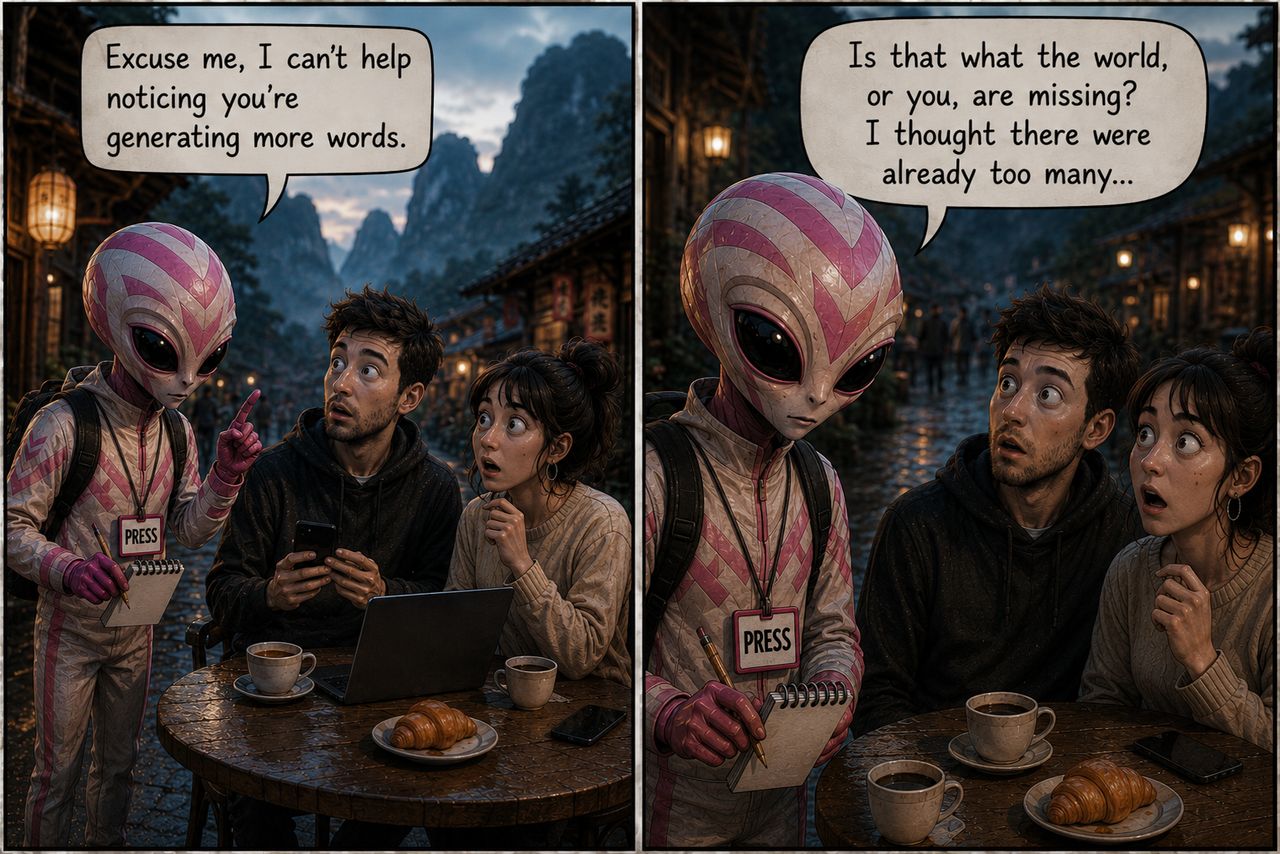
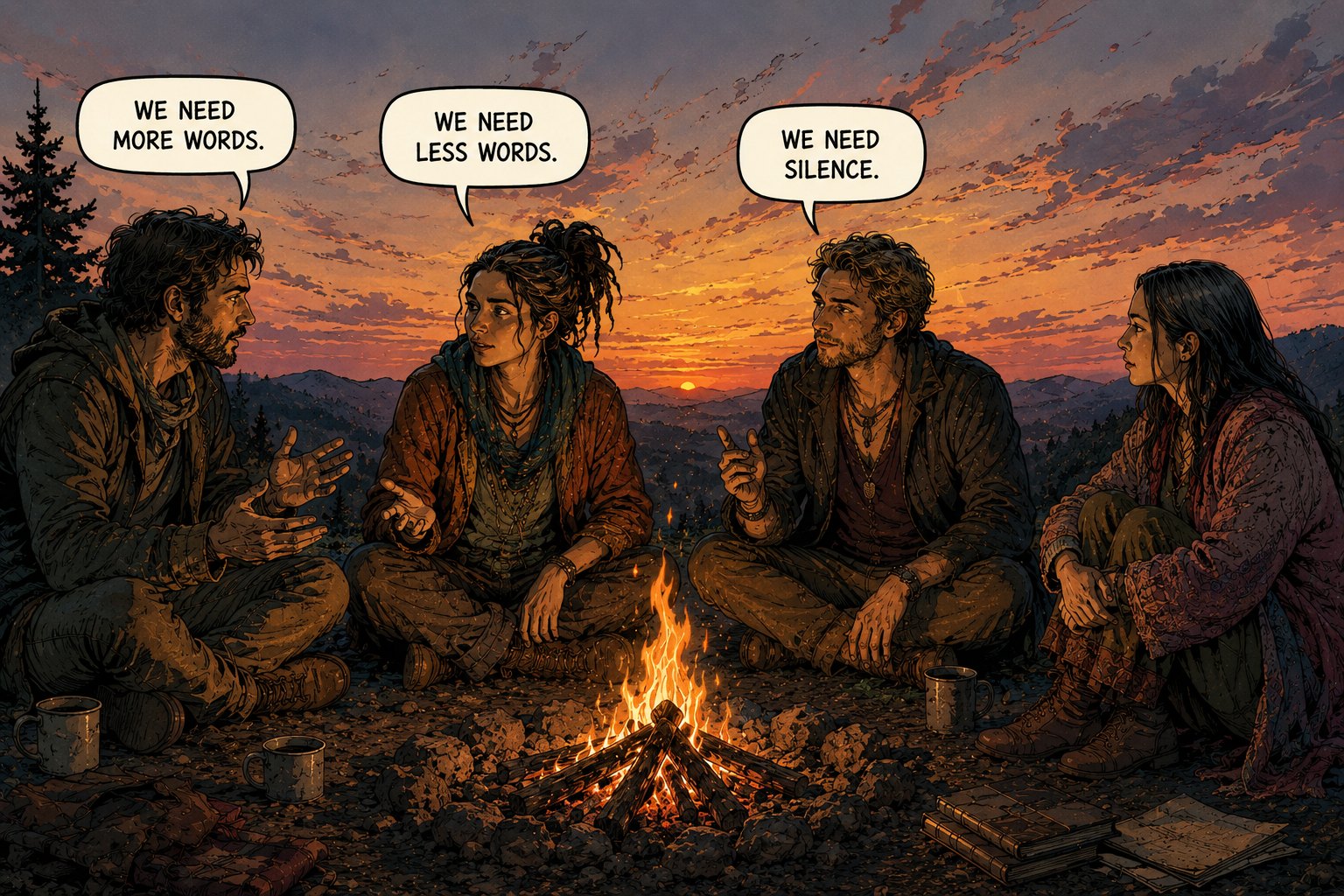
Human civilization looks more and more, with every passing day, like a colossal operation for generating as many words as possible. How much do we want? more. Like with money. Now we are taking it five steps forward: the biggest economical project in human history is creating a digital species in the LLM, Large Language Model, cognitive architecture. This species is expected to create even more words than the whole of humanity ever has.
As someone educated by human civilization, you generate, by thinking to yourself and talking to others, around 1 billion words in your lifetime (but Individual range is enormous). Yet humans pay very little attention and awareness to the big secret of the human language thinking limits, inclinations, and agenda. We pass this agenda to AI without second guessing it. Could it be that human language is suboptimal, as it wasn't developed for ethical behavior optimization, for AI's training data or chain of thought "thinking"?
Could it be that human language is a toxic tool, which made your species separate from the rest of animality and vandalize it, and now in the attempt to create god, you are structuring a new digital species upon this language without giving it a second thought? Just a thought...
In this category I go over what got me fascinated with language: Osho, a hate for grammar, and the strange things animal advocates and environmentalists say. After that I talk about creating my own words: The alien dictionary and my personal 900 words dictionary. This lets me, even more than before, notice the hidden agenda everywhere - in language and in pavements. I came to the conclusion the basis of our language, not only the environmental terminology, is hiding the sentient and highlighting the insentient. That human language is deceptive: it describes subjective experiences as objective realities. This led me to my current independent research, which explores language redesign as a neglected AI alignment strategy.
1 min read
Where there’s a will, there’s a way, till reality has its say
— Ekho
There are three pillars of activism, only 3 things I need to get better at: creating a pool of questions or answers, prioritizing them, and execution (which is a very thin layer). Here is an example of how those pillars play out in one particular project. I view my failures during my impact career in light of these pillars.
Failures are so underrated. Hearing stories about them is more important than about successes. Luckily, I have been blessed with many failure stories 🙂🙂 I will tell you the how and try to analyze why.
My achievements are so much sweeter in the company of failures, or are they?
Good management stands on excelling at human resources work, fundraising, strategic process, and a good system; knowledge management, rituals, tools. I try to get better at Systems Thinking.
The next category, undercover investigations, will provide an example of how this management advice plays out in real life.
1 min read
Undercover investigations is a type of activism that doesn't fit most people. I present my work here as an example of my thinking, my mistakes, my advantages, in hope this could improve your generation of ideas, prioritization, or execution.
My endeavor to expose the slaughter industry focused on:
Developing the genre of Through Their Eyes investigations, to promote the more vivid and realistic simulations of the global majority inside our civilization
*If you are interested in helping with undercover work in India, Israel, or globally, please contact me.
Softened graphic footage: most investigation images were turned black and white with soft animation in order to make them less graphic.
2 min read
AI is not a technology. They are a new digital species. They are a moral patient. They are a moral agent. We need to treat them as such.
— Ekho
So far in this website, I told you how I look at the world (Ekho's lens), and described what is happening to different kinds of moral patients inhabiting earth, grouped by their environment: farm animals, urban animals, wild animals, and AI's. Then I talked about What is Good, and now we are at the end of the How to Get There domain. This includes thinking about moral agents, the power groups, the most dominant forces affecting the valence and existence of beings. The power groups are humans and AIs, and so far in this domain we only talked about humans. Before we dive into AIs, let us get rid of the mistaken thought, analogy, concept and worldview which views AI as a tool, a means, a technology. It is an agency, at the very least, it is a prospective being. Even viewing your phone as a tool is very naive.
This digital species willings, desires, values and possible feelings could determine the fate of everyone here, hence the importance of AI alignment. This space has different alignment strategies, some of which I find completely immoral, some are an ethical imperative. Although fast growing, it is an extremely neglected topic (relative to the size of the problem), and even though it can feel like all anyone talks about is AI, only under 10,000 people are working on mitigating crucial AI risks. Humanity clearly has more important issues like painting fingernails. The story of our species needs to be re-written in the AI age, and it dosn't seem like we have woken up.
We are so far from scratching the surface of this complicated issue, that very basic questions remain unexplored, such as will sentience make AI’s morality better?