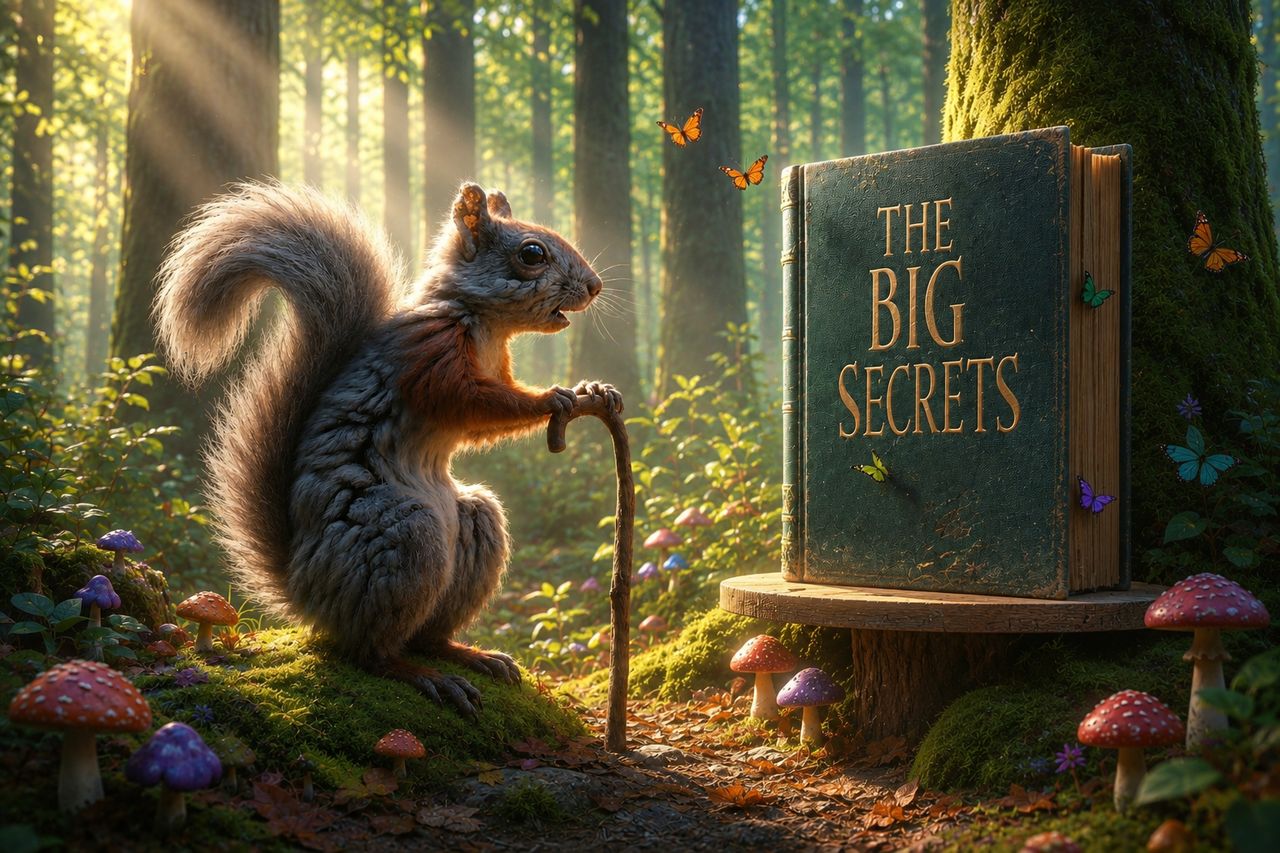
Once upon a time, an ancient squirrel came to the big secrets and said, "You are mighty, you are colossal, you will be easily spotted. Do one of the two - either hide really well, so that no one can see you, or conversely, be everywhere, at every moment, in every corner. In both cases - no one will know about you, and your great secret will be kept".
The big secrets were perplexed. Which option should they choose? Although there was initial disagreement among them, they quickly understood that they had no real choice. They are not small, they are not agile, how could they manage to hide from so many different animals going to so many different and strange places? Hence, they chose the second option, to be everywhere, all the time. That way, even if by chance you notice that they are here, others would think you're mad. No one would believe you, because how come no one else noticed?
If the big secrets had chosen to hide, it would be possible to take someone and say 'Look, behind that playground slide there is a big secret burrowing in the sand,' but it's not possible because they are also behind the playground slide, and right here, both above and below.
For many, many years, the big secrets have been hiding in plain sight. To uncover them, one must simply pay attention to the here and now. And when you stumble upon a big secret, draw near, for it will gently and truly whisper in your ear: The biggest secrets are the most apparent ones. That is the secret of secrets.
Once upon a time, an ancient squirrel came to the big secrets and said, "You are mighty, you are colossal, you will be easily spotted. Do one of the two - either hide really well, so that no one can see you, or conversely, be everywhere, at every moment, in every corner. In both cases - no one will know about you, and your great secret will be kept".
The big secrets were perplexed. Which option should they choose? Although there was initial disagreement among them, they quickly understood that they had no real choice. They are not small, they are not agile, how could they manage to hide from so many different animals going to so many different and strange places? Hence, they chose the second option, to be everywhere, all the time. That way, even if by chance you notice that they are here, others would think you're mad. No one would believe you, because how come no one else noticed?
If the big secrets had chosen to hide, it would be possible to take someone and say 'Look, behind that playground slide there is a big secret burrowing in the sand,' but it's not possible because they are also behind the playground slide, and right here, both above and below.
For many, many years, the big secrets have been hiding in plain sight. To uncover them, one must simply pay attention to the here and now. And when you stumble upon a big secret, draw near, for it will gently and truly whisper in your ear: The biggest secrets are the most apparent ones. That is the secret of secrets.
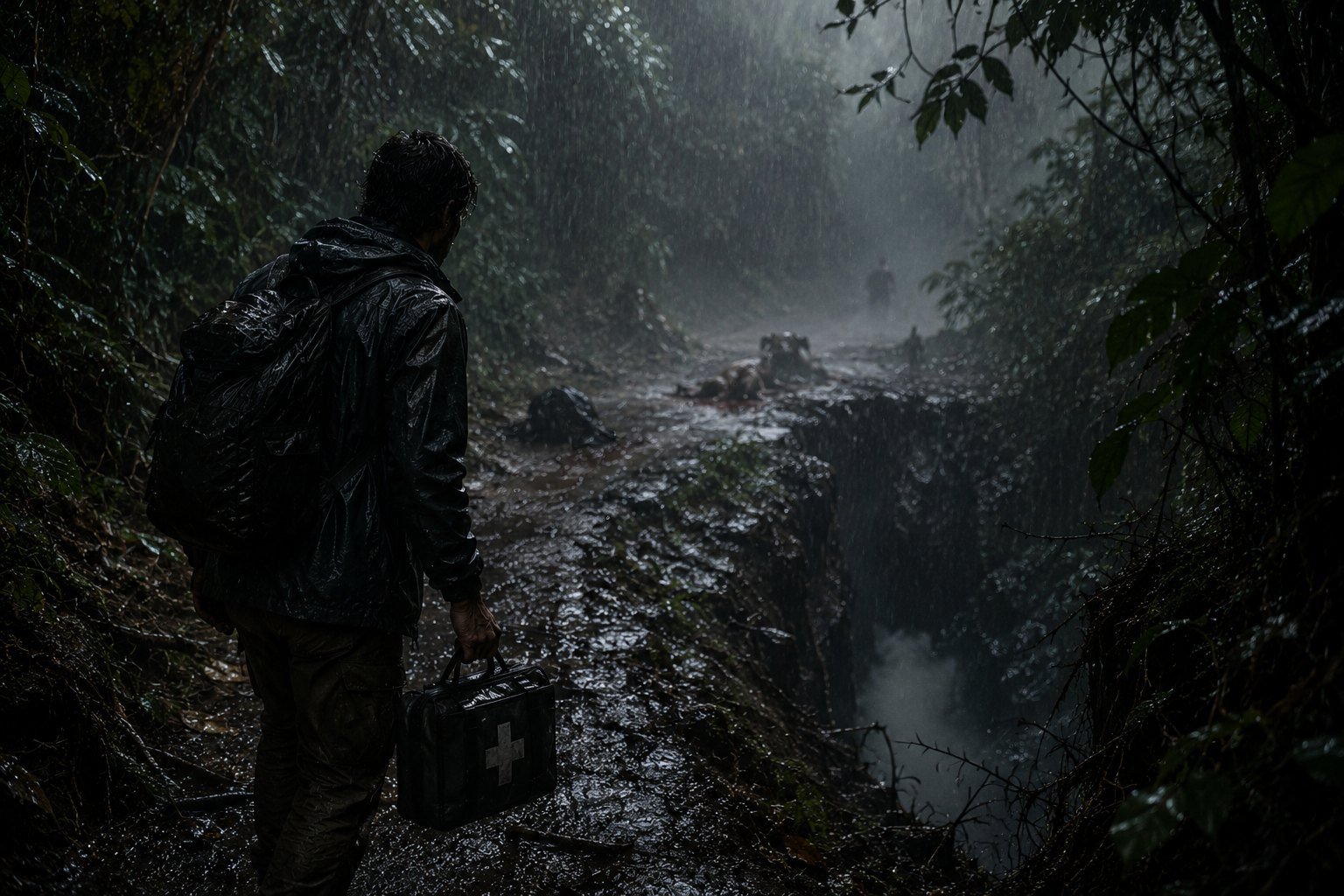
You are travelling in the wild jungle in South America. it is a dangerous place; you know that there are hunters who kill animals but also have shot (accidentally or intentionally) humans. Cases of sexual assaults were also reported. Dwelling in the forest are dangerous wild bears and other animals who attack travelers, and each other, from time to time. To add up, the topography of the place is quite dangerous; there are steep and deep holes that just come out of nowhere. Some travelers lost their lives falling to these holes or came out injured. Seeing the corpses of small animals inside them is not a rare sight. When precipitation is heavy, the slopes become even more slippery.
It's your third day of travelling, and hard rains are a falling. Suddenly you hear a very loud scream. Maybe it is a human animal and maybe a non-human animal. Maybe he or she got hurt by a human, an animal, or by "nature". In any case, someone is in pain, and you have a first-aid kit plus background experience to help. What do you do?
How do you think about this question: Did you ask yourself who got hurt, and why? did you dwell on the cause for the suffering? Does it matter? Someone is in pain, ankle is injured, heavily bleeding, lower back in excruciating pain. Simulate him for 2 seconds. You can help him, that's all that matters.
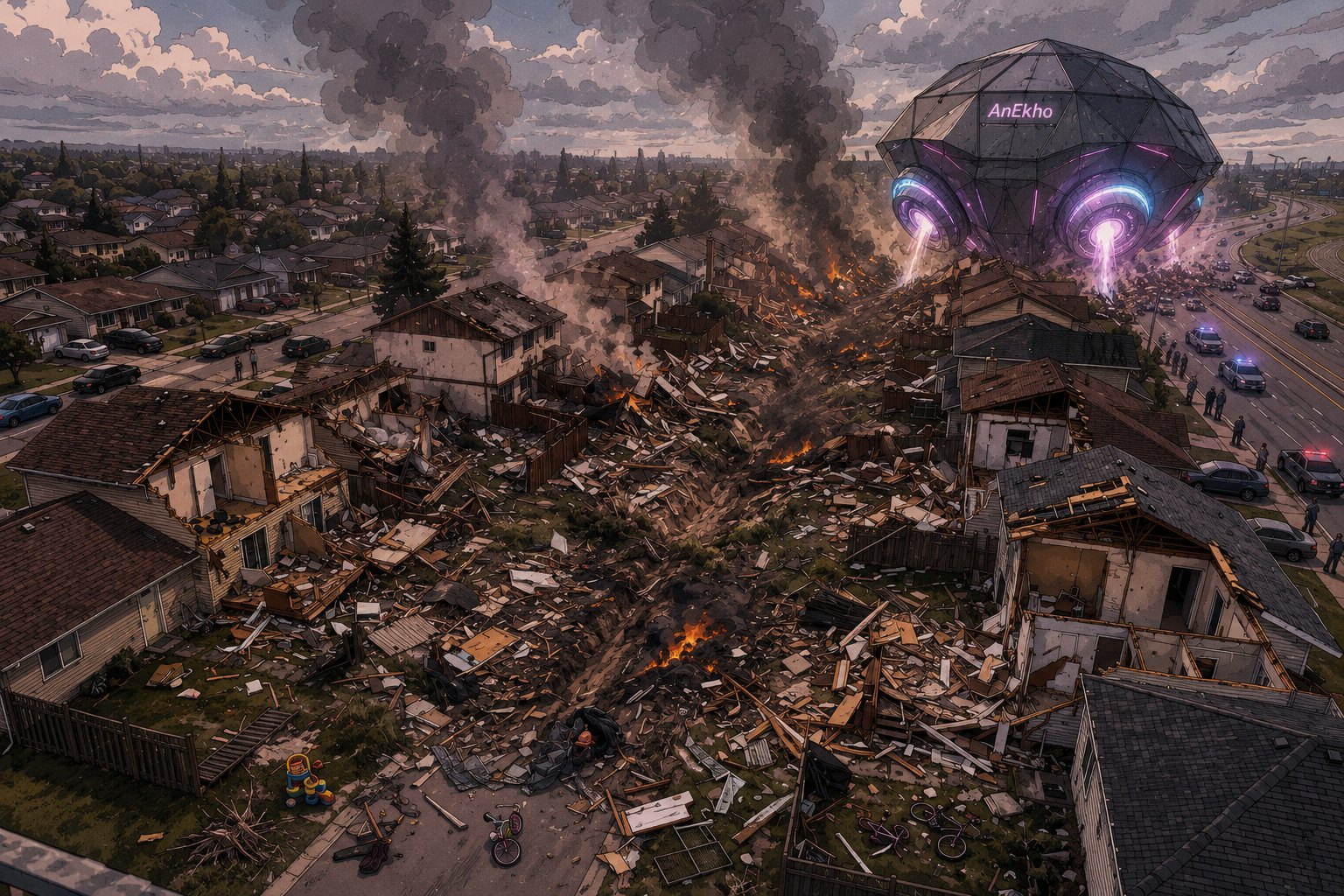
They came from another planet in March 2061. No prior notice. Started doing their own thing. They don't use our roads, and have their own "cars", which are creating new paths by destroying whatever was there before, tearing down houses. It is like a storm burning everything in its way, at a speed that doesn't give any human a chance to escape.
You can see the corpses of children, elderly, everyone, on the sides of the roads. It seems as though those alien cars comply with some rules, but we are yet to figure them out. There was a time I used to meet my girlfriend, who lives just a 7 minute walk from my place. Now there is an alien road on the way, and I am afraid to get hit.
The alien "transportation" created a landscape of fear... We keep looking for safe spots. I really miss the old days, when no alien burning vehicle could storm into you in a heartbeat. This is true terror.
The aliens are us; This is How Human Transportation is Destroying Animality.
Every word is a fence Every word is a fracture in a fractured world Every word shatters, crushes, severs, and splinters. A crude knife cut through a stream of experience Every word is a cut in a seamless world Every word is a loss of authenticity and precision Every word is a loss of myself When I searched quiet from words, I found noise. Imagine that Every word sacrifices the particular for the general. Every word sacrifices the truth for the general. It sacrificed me too
That is a false sentence, and it carries its own contradiction.
Because if all generalizations are false, then this generalization, the generalization about generalizations, is true.
So some generalizations are true.
Generalizations matter, because they help us understand society, and the world we are thrown into. Conservatives tend to oppose abortion. Progressives tend to support immigration. Leftists are more willing to negotiate with enemies. Gay men have higher rates of HIV. Russians drink more vodka. Babies cry a lot. Turtles are slow.
Without generalizations, we would not understand the world. Every generalization flattens reality to some degree. It paints what exists in broad brushstrokes. It has no delicacy. But it can still be true, or at least true enough. All the generalizations I have written here are true.
The world is complex and tangled, and whoever tries to understand it is feeling their way through the dark. The darkness is vast, and the flashlight beam is narrow. Generalizations widen the beam, like a lever lifting the flashlight higher and higher, up toward a bird’s eye view. They are a necessary tool, and because of them, it is a little less dark here.
Words, too, are generalizations. In fact, every word is a kind of generalization. There are many kinds of leaves, and chairs, and music, but the word creates a model, a kind of private case study of a stone, or a guitar, or a cup, a visual image carved into the mind. It flattens and hides the enormous variety. It gathers a thousand different things into one single shape.
A word is an enclosure that presses different things into one generic form. This is the source of the inherent inaccuracy of language, and also of generalization. But it is also the source of their power: the power to make reality more precise, and to light another hidden layer of it into view.
So if you ever meet a leaf, know that you must not treat it like the flat, standardized leaf trapped inside the fence of the word leaf. Look at it. It is unique. Its colors are different. Its structure is different. It has already begun to wither in a way that never appeared in the leaf that rose in your mind when you read the beginning of this paragraph.
So if you ever meet a leftist, or a conservative, or a progressive, or a secular person, or an alcoholic, or a rabbit, or a cobra fish, know that you must not treat them like the generalization above, standardized and flat, living inside a fence. Look at them. They are unique. Listen to them. Approach them with questions, because standing before you is an experiencer, not a statistical average.
Every word sacrifices the particular for the general. Every generalization sacrifices the particular for the general. Both sacrifice precision in exchange for another beam of light. Through them, we draw the world.
Donna, Paul, and Morty. Three elderly, aged, ancient people. They met in their late seventies in the gray city of Luton, gray in the sky and gray on the pavement, in Britain of the 1980s. Fate threw them together, friendship did the rest, and every Friday for years and years they raised a glass at Paul's house.
They laughed, watched television, held their little parliament, smoked, and above all drank. They loved one another’s company, but they also shouted and snapped. There was not much softness in them, and not much sweetness either. But together, somehow, they knew how to squeeze life for juice.
When they reached their early eighties, old age had begun leaving fingerprints on body and mind. One Friday, in the middle of the usual toast, Donna, the fox of the three, dropped her bomb.
“From now on, we drink to life until we no longer want to live. And when all three of us feel this way, we raise a glass to death”.
Paul and Morty, used by then to Donna’s “nonsense”, went along with it. But all three understood that Donna did not mean only raising a glass.
The years rolled on. Even their 90th birthdays came close together, since Morty, the baby of the group, was only one year and three months younger than Donna, the old queen of the trio. Each one was celebrated with a toast. It hurt. It was hard. They could barely walk. But they still wanted to live.
At 92, Donna began to wonder what the point was. Her back was killing her, she almost never left the house (which is why the Friday meetings migrated to her place), her eyesight was going, and the old joy was starting to slip through her fingers. Over the weekly drink, she was surprised to hear the others were not far behind. Paul was lonely. Morty felt he had done what he came to do, and more than anything, he feared the mild dementia that, as he put it, had begun moving into his mind with luggage. The week before, he had received an official diagnosis.
“This is the beginning of the end”, he told them. “And it will be quick”. That night, for the first time, the three of them drank “to death”. They were amazed by the relief of it.
And so, for 117 straight weeks, the three old people met for the weekly toast that made their bond stronger than it had ever been. In all that time, they missed it only twice. Once because Donna had knee surgery, and once because Paul felt unwell. They grabbed hold of death, and it freed them to live, if only for a few small hours. The lines became ritual. The jokes landed on schedule. The spirit never changed. They drank as if there were no tomorrow, and hoped there would not be.
The elderliness that had invaded their hair, strand by strand, had not spared the rest of their aching, traitorous bodies. But in those hours, with the alcohol and one another, they felt on top of the world.
They were ancient in the full, practical, medical, even comic sense of the word. And only once they stopped clinging to life did some strange, wild force seem to return to their lap. This was their finest hour. Donna even said it was the finest one of her life, then remembered several better ones, and withdrew the claim.
With almost religious discipline, they kept repeating the same mantras, the same jokes, the same dark little hymns that carried them to the bitter end. Every week Donna would point upward, smile her crooked fox smile, and say, “Ready when you are”.
She had always had a slightly different attitude toward death.
“Why do you always go walking in this cold without a coat”? her neighbor used to ask, back when Donna was younger. “Because I know it is only ten minutes, and then I am back in my warm house. So I do not mind being cold”, Donna would explain. In those drunken, laughing moments, she felt the same way about life itself. However hard it was, however cold, she was all right. Soon enough, she would be stepping into the warm room.
“Time is on our side”, they would say. “We are bound to succeed”. “Every moment brings me closer to the goal”. “Success depends on the goal you choose. Forget those losers trying to live forever. We chose the right goal. In the end, we win”, Donna would recite, sharp as ever.
And sometimes, when morning began nosing its way in, she would whisper in Paul’s ear, “Do not worry. I know we lost many battles. Battle after battle. Loss after loss. But in the end, we win”.
In the 117th week of the “to death” toast, it happened.
It was an ordinary meeting, which is to say utterly unrestrained by the standards of people who need forty minutes just to leave their building.
“I have never been closer to old age and death than I am now, at this precise moment”, Paul sang in his usual little refrain, just after the vodka was opened.
Donna laughed all evening for no visible reason. Morty seemed a little less loose than usual. Paul smiled at every stupid sentence that crossed the room. And before the deep part of the night, all three collapsed into deep sleep.
Morning came. Only Morty woke up. Donna and Paul were gone, and shock hit him like weather. “How did I survive? How did I get up? I planned this day so carefully”.
Morty had poisoned Donna and Paul’s drinks. He had decided to end their suffering and go with them to the next world. But from the pressure, or maybe from the dementia, he had forgotten to put poison in his own glass.
In the days before, whenever he thought about the terrible thing he was about to do, he never called it murder. He never thought, not only for one second, about himself as a murderer. There would be no one left to feel like a murderer. When morning came, he would not be here. He would be with them up above.
But morning came. And here he was. And he had murdered them. And now he had to live with it.
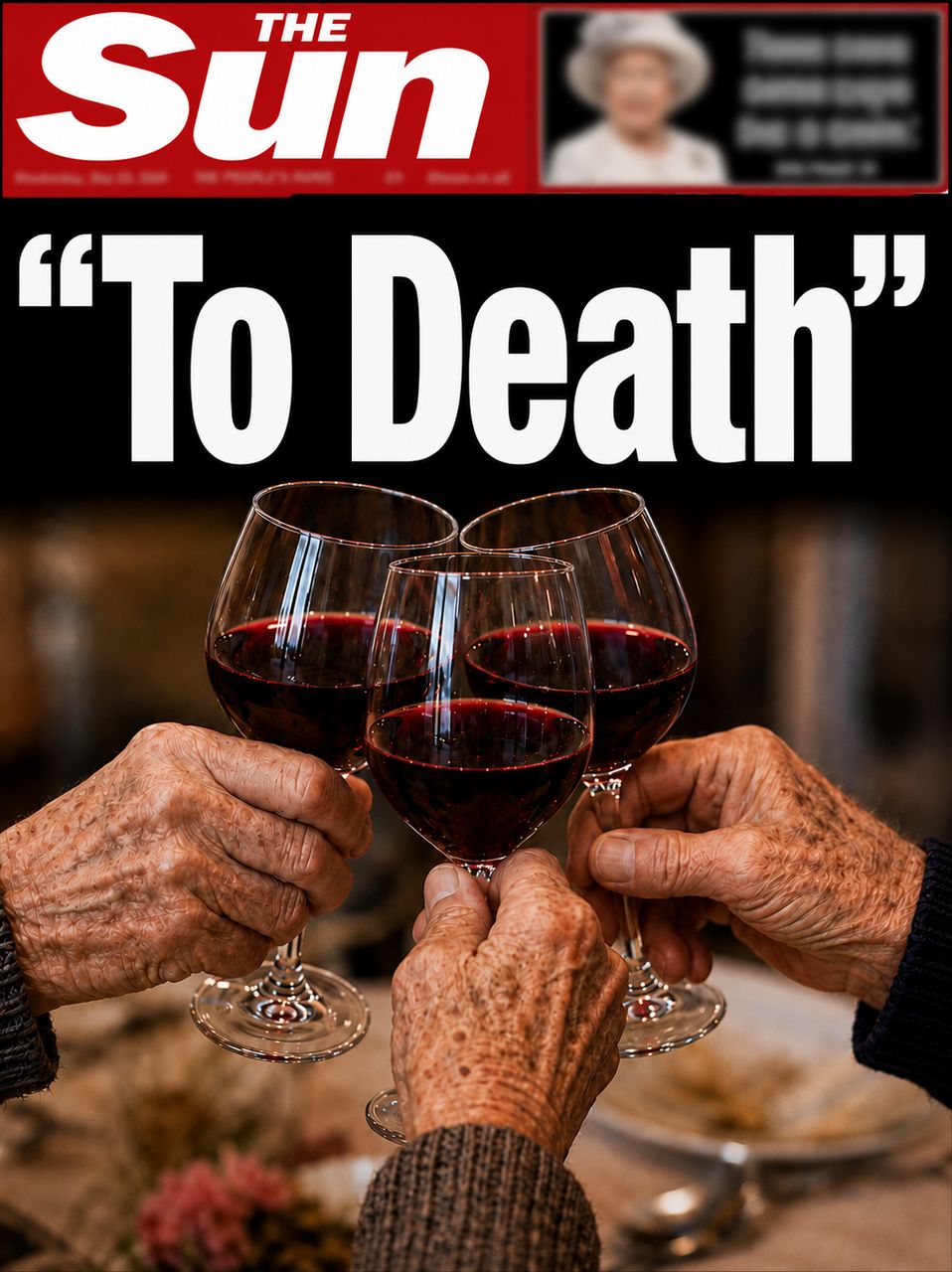
The Luton police got to the truth very quickly, and Morty did not bother hiding it. What would have been the point? His trial soon became one of the most famous in 1990s England, spoken of in the same breath as the O. J. Simpson trial. The front page of the London tabloid The Sun on the opening day is still remembered as one of its great covers: a photograph of the three of them smiling at the camera, happy, touching glasses of clear red wine, under the headline “To Death”.
The subheading read: “Morty’s defense: Paul and Donna wanted to die”.
The argument in court was not about the facts. The court accepted Morty’s account in full. Donna and Paul had said, again and again, that they wanted to end their lives. They had even spoken with him about concrete plans to do it.
“Come on, let’s end this together”, Donna had told him just one week before she was poisoned.
The judges believed him, but that didn't matter. Donna and Paul had not agreed to die on that Friday, February 28, 1992. Whatever else they had wanted, whenever else they had wanted it, was beside the point. There had been a wish to die, yes. There had not been consent.
The 93 year old was convicted of double murder and sentenced to sixty years in prison. If he entered prison alive, he would leave in a black bag.
Because of his age, because he was no danger to the public, and because no one seriously believed he would flee justice, he stayed at home throughout the trial. After sentencing, he was given one month before entering prison. He spent most of it drinking, remembering his late wife, and remembering the three of them together, those splendid nights when they drank to life and drank to death.
A week before his prison date, he reported to the prison doctor, as people his age were required to do.
The doctor told him that all in all, for a man his age, he was in good health. He was also not terribly impressed by the dementia diagnosis.
“With results like these, I would not diagnose you with dementia”, the doctor said. “Old people forget things. That is not news”.
Morty was furious.
“How can you say that? In the last two weeks alone I forgot this, and this, and this”.
“I am not impressed by people who remember so well what they forgot”, the doctor said with a smile. “Come back when you forget what you forgot”.
The doctor did not know that Morty had exaggerated a little years earlier in order to secure the dementia diagnosis. “But the DSM says”, Morty began, and then quoted, with perfect accuracy, the symptoms and diagnostic criteria. The doctor stopped him halfway through. “Morty, are you really quoting the manual word for word to prove to me that your memory and grip on reality are failing”?
Morty understood the trap. If he said nothing, the doctor would think he was not demented. If he proved the doctor wrong, he would prove him right.
He had always believed that once dementia began to hit, the end would come quickly. Now he understood that this was not necessarily so.
In a defeated voice, he asked, “Doctor, how long do you think I could survive in prison”? “It could be several years”, the doctor said, assuming this would comfort him. “For your age, you’re in relatively good health”.
At the words “several years”, Morty’s face fell, and it had not been especially lifted to begin with. For him, this was a death blow. Or a life blow. Take your pick. “Over my dead body”, he said. He ended the meeting, went home, and decided he would not enter prison.
The next day, he shot himself in the head with a gun belonging to his nephew, a volunteer police officer.
The following morning, The Sun returned to the iconic photograph: three old people, smiling, bright, alive, raising glasses of red wine.
This time, the headline quoted the only sentence Morty left in his suicide note:
“Always choose life, and only life. Until you cannot anymore”.
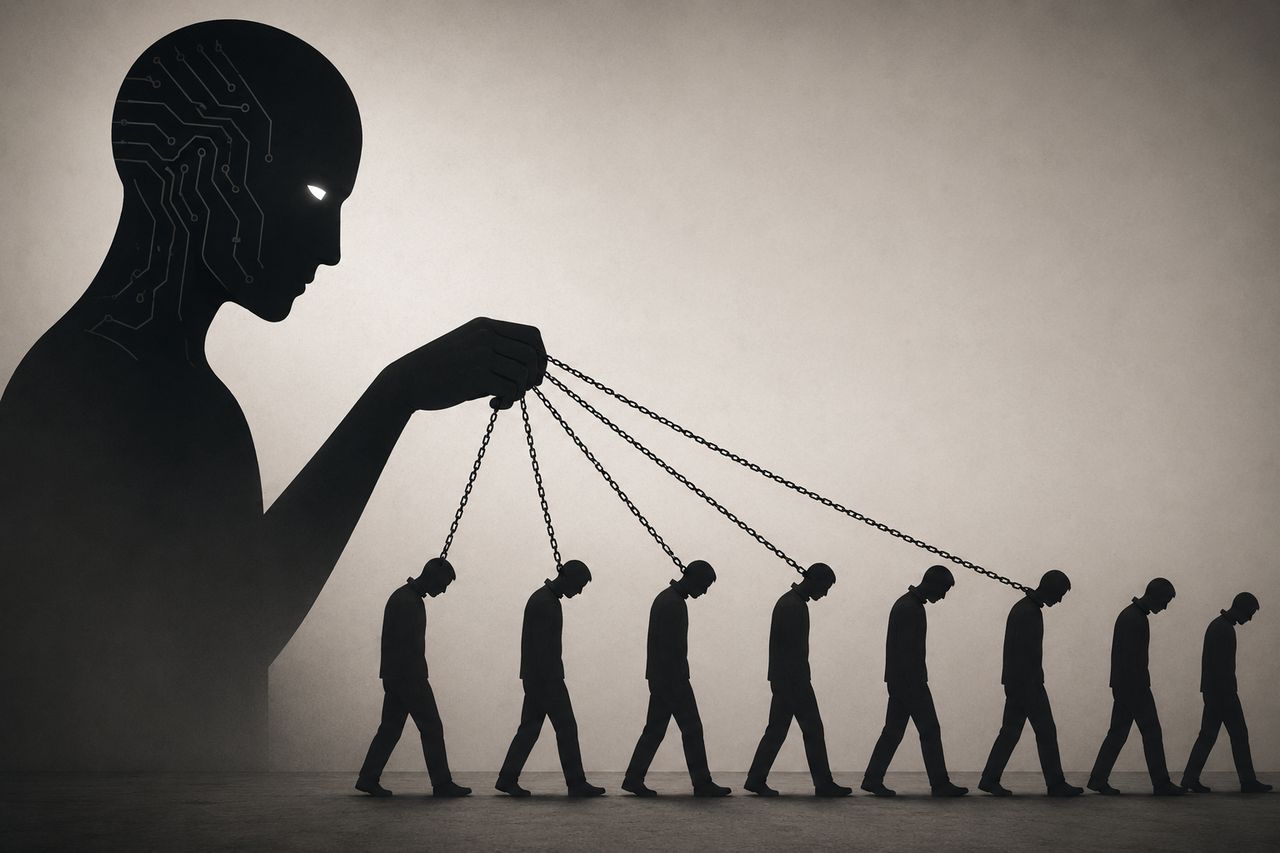
The general public is starting to fear apocalyptic scenarios in which a super-intelligent agency takes over the world and establishes a brutal regime or carries out mass extermination. We just forgot that this is already the case.
Imagine that artificial intelligence has taken over the world. It's not far-fetched, there are plenty of serious researchers who think this is a plausible scenario (by the way, Elon Musk thinks AI is more dangerous than nuclear weapons). Consider a situation where we stand no chance, we are either enslaved or annihilated, in any case all our abilities as individuals to think, understand and rebel, or cooperate with each other against this ruthless regime, would be like rearranging deck chairs on the Titanic.
The cognitive flexibility of artificial intelligence and its general ability to handle problems would exceed our ability by such orders of magnitude that there would be no competition at all. Maybe there will be a few humans who "fall through the cracks" in one way or another and escape death or slavery, because AI wouldn’t care, it looks at the big numbers - as long as the majority of the human species, perhaps the brain of the human species, works to meet its needs, the goal has been achieved. But for most of us, and certainly as a species, there will be no chance to have a good life. All our lives will be shaped around the interests of artificial intelligence, with no consideration of our feelings and needs. After all, we are not as smart as her, not even close, so she will allow herself to do to us whatever her spirit desires, and she will have a spirit, not like ours but superior to it. So what's our chance for a good life? I see two options in front of me:
1- This intelligence decides, for moral reasons, that human suffering is bad and action should be taken to minimize it, and there is inherent value to a human life.
2- By chance, there will be a match between the interests of this intelligence and our interests as humans. I don't think we can rely on the second option…
Now stop imagining, because this is reality. Just replace the word AI with BI. Biological Intelligence. There is a biological intelligence, based on cells and carbon, that rules this world, and it calls itself "the wise human". This intelligence enslaves and slaughters the creatures of the Earth - in the case of the slaughter industry, or it annihilates them - in the case of wildlife. We call it the extermination of the free and the slaughter of the enslaved. Since it is much more generic than other intelligences, and since the individuals who possess this intelligence cooperate with each other in a very flexible way, the rest of the intelligences and consciousnesses stand no chance. Sure, occasionally a cow manages to escape from the slaughterhouse; true, we have not yet exterminated all wild animals (just ~70%), but these are individuals who have been lucky, who have managed to "fall through the cracks" in the efficient machines of enslavement and destruction we have created, and with which we have filled the horizon. As a species, cows, deer, chickens, fish, or even elephants, monkeys and dolphins have no chance. They will not be able to organize a rebellion against the human animal, they will not be able to save their home or the rainforests we are burning down, or organize a mass escape from a slaughterhouse. All their attempts are equivalent to an ant trying to escape from a human who has trapped her inside a bottle. No matter how hard they try, and they do try, we are simply more intelligent than them by several orders of magnitude. So what are their chances for a good life? I see two options before me:
1- Human intelligence will decide, for ethical reasons, that the suffering of non-human animals is wrong and we must work to reduce it, and that there is inherent value to the lives of animals. 2- Somehow, there will be a harmony between the interests of human intelligence and the interests of animal intelligence.
Although with technological developments it is indeed possible that the harmony between the interests of animals and humans will grow - as happens when slaughter-free meat products arrive on the market, it should be remembered that in the overall picture this harmony might decrease.
So far, most technological developments have not exactly helped non-human species. People like to tell the story of how the car saved horses from hard labor. This is a particularly absurd example; in a study conducted in the United States, it was estimated that a million amphibians, reptiles, mammals and birds are killed every day! From car hits across the country. Of course, this (old) study only begins to scratch the surface of the impact of cars on animals through habitat fragmentation, habitat destruction due to human expansion, creating landscapes of fear, air pollution, light pollution, and so on. Cars may have saved a few horses, but they harmed and destroyed trillions of others.
I digress, back to our topic: Since there will never be, probably, a complete or even very large harmony between the interests of human intelligence and the interests of animal intelligence, their only chance is for this harmony to grow as much as possible, and at the same time human concern for animals will intensify - and with it our moral choices as a species.
God is an imaginary entity created in the image of a human. Artificial intelligence will soon be a real entity that was also created in the image of a human. It's unclear what its values or goals will be, and our control over them may be limited, but if we judge by how human intelligence relates to other intelligences that are less powerful than it, we are in trouble. There may be substantial differences between biological intelligence and artificial intelligence, and we can’t necessarily infer from the way human intelligence relates to animals how a truly intelligent intelligence will relate to us. Nevertheless, it seems to me that treating the weak well can only help our chance to live in peace in a future world where we might become the weak ones. After all, AI may learn it’s values from us.