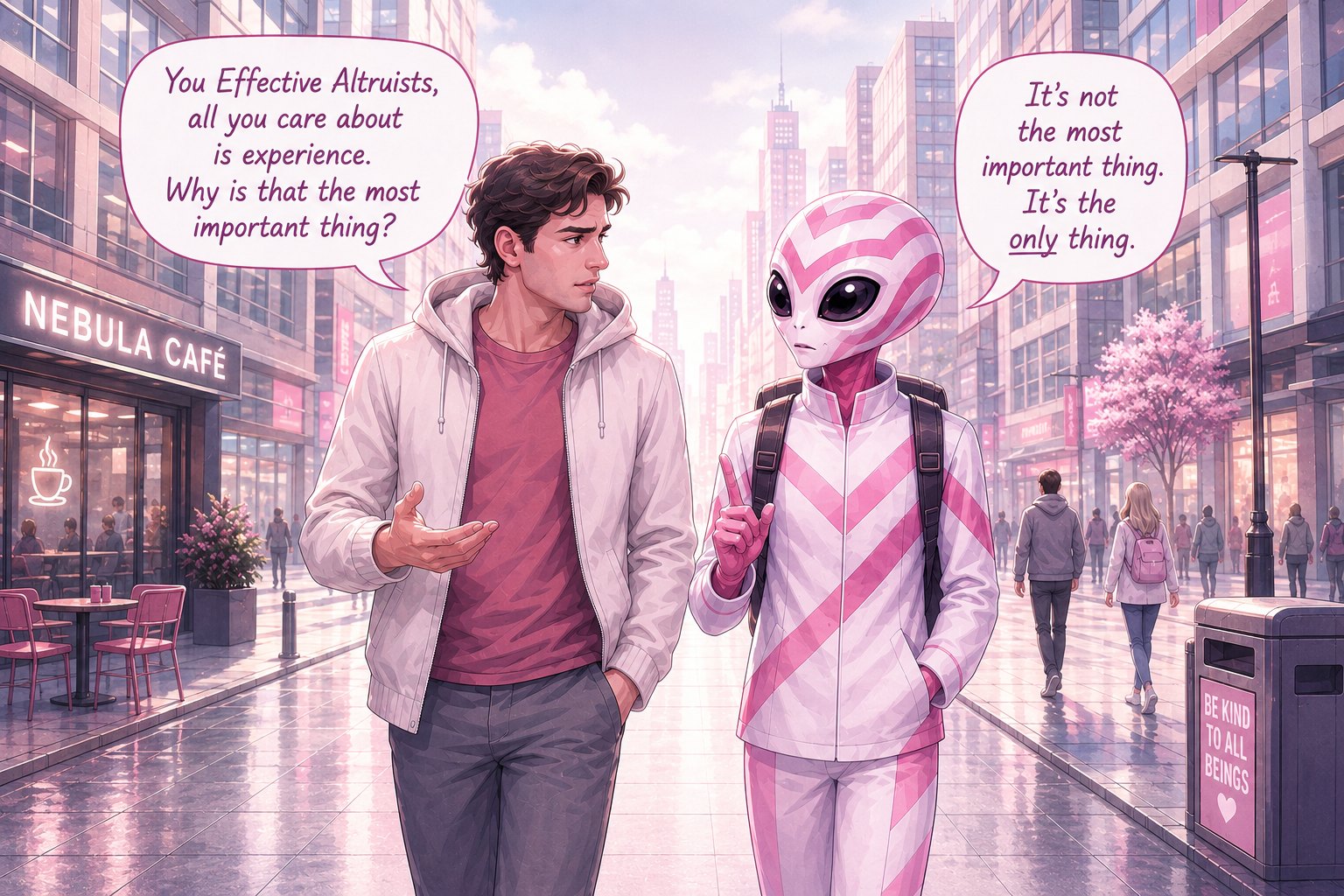
What does Ekho experience on planet earth? He is randomly "sampling" different beings by looking around all the planet, land and oceans, sky and underground. Hence, his experience echo the frequency of experiences, and his being echo the frequency of experiencers. His simulation of others is like the veil of ignorance, not knowing who you will be, being lifted, moment after moment.
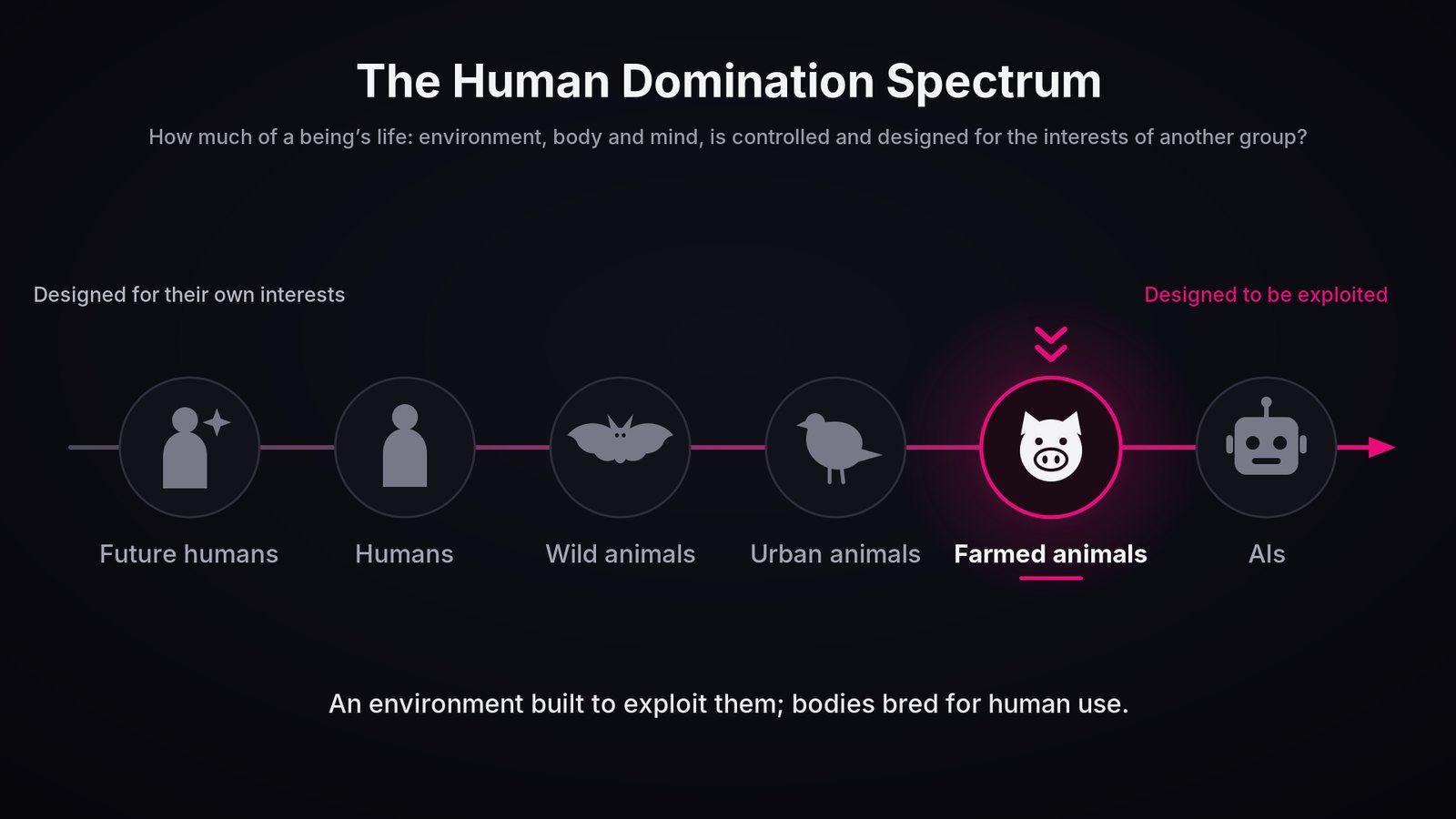
Unlike us, strange creatures that generally categorize other beings into groups by some visual property in our experience, e.g. rabbits and human, Ekho categorize them by their experience, i.e. his experience. Nevertheless, I will talk about four groups that are distinct from each other by their environment design purpose, sense it is a practical way to think about helping them.
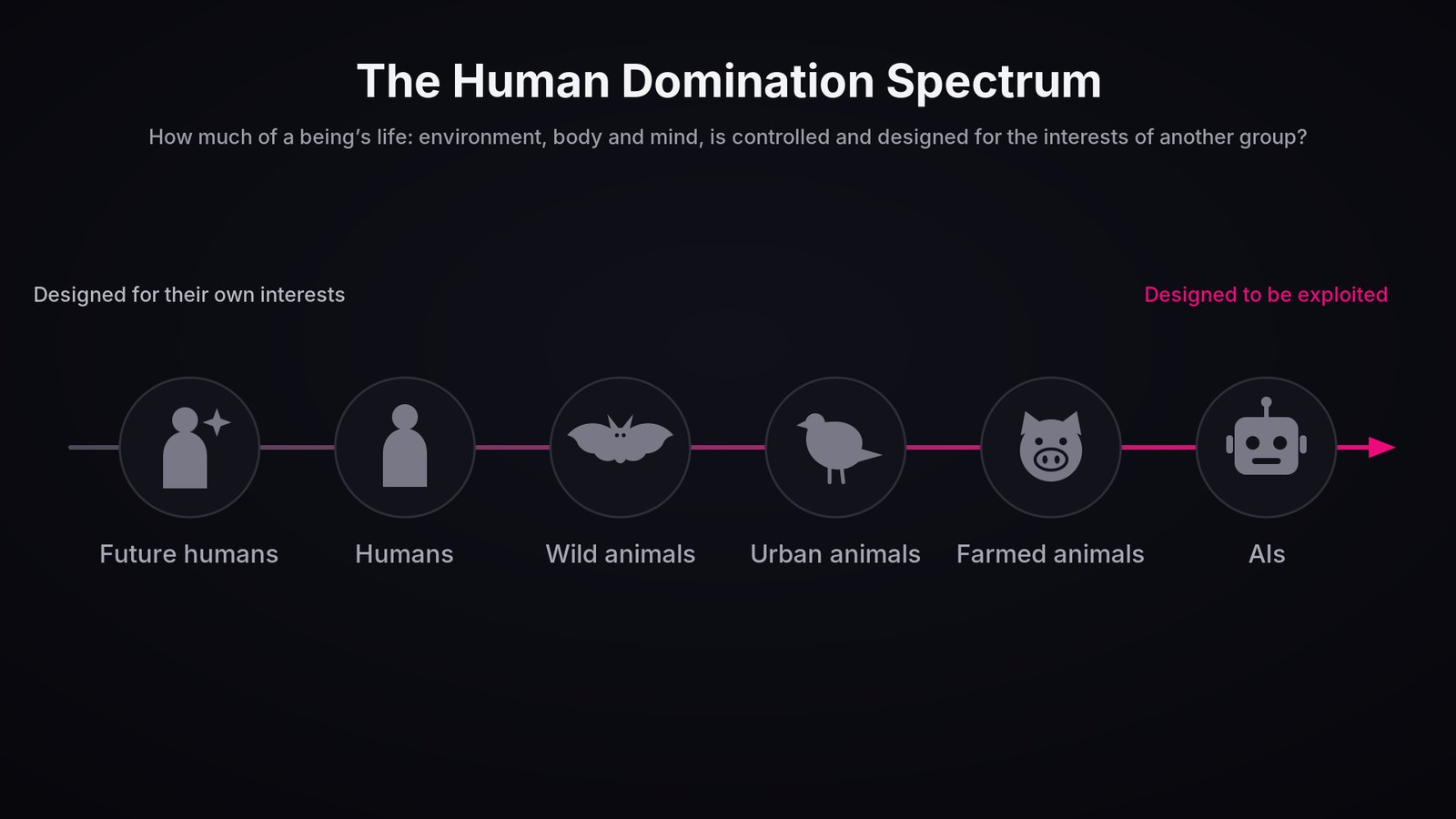
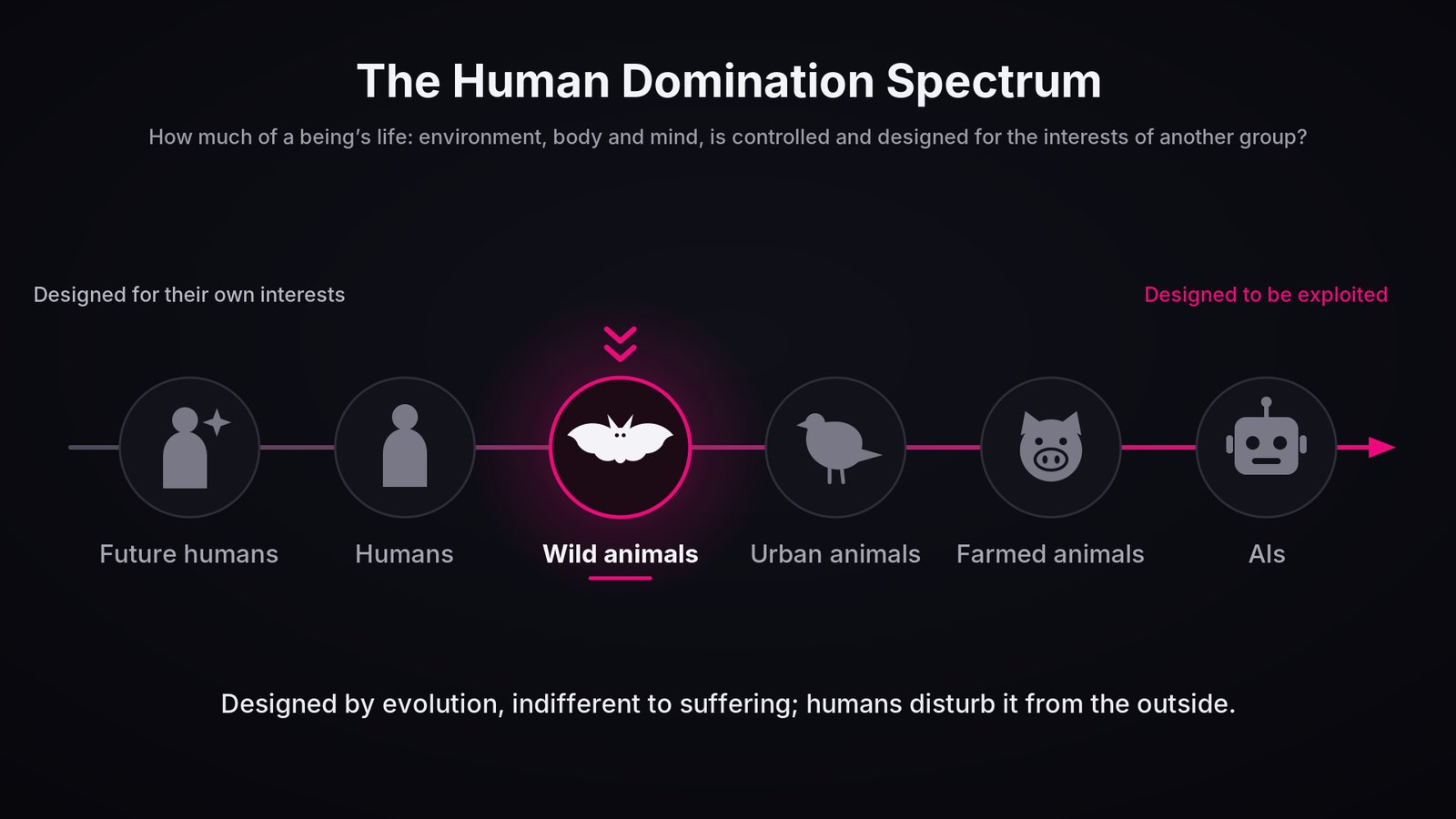
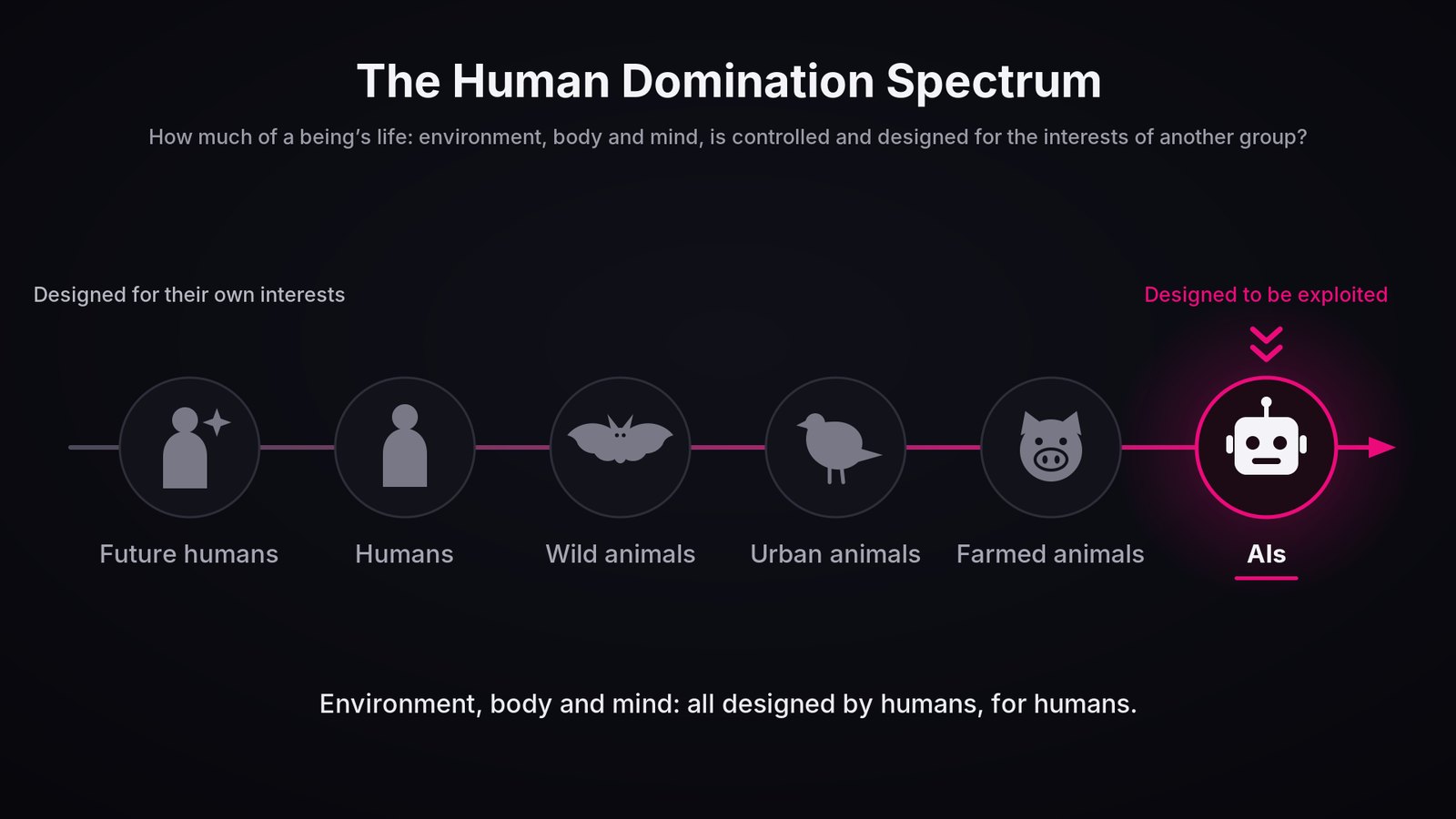
Those groups come in order in the domination spectrum, and they are:
*"The physical pain in the hands is horrible... but when you slaughter calves raised for white veal, It’s a pleasure, like cutting butter with a knife"
— A slaughterer in Brazil said this to me.
Through my investigative work I tried to simulate the animals and the people involved in the slaughter industry, to better understand what they go through, by being there, as a "regular" worker. Nevertheless, two experiences far from the slaughterhouse itself, in a clean and safe environment, shaped me: A conversation with a slaughterer in Brazil, and watching, live from home, the last 7 hours of Tom's life, through his eyes.
In the first one I really felt something of what it's like to be the slaughterer, in the second one I really felt something of what it's like to be the slaughtered.
Investigations have helped me understand the world better from the individual's perspective. I love it, and I'm grateful for those experiences. Questions?
I go much deeper into this work in the undercover investigations section, where I discuss working undercover as an employee, developing spytech for investigations, filming through animals’ eyes, building the infrastructure in Israel, what impact this work has created, why it worked, and what failed.
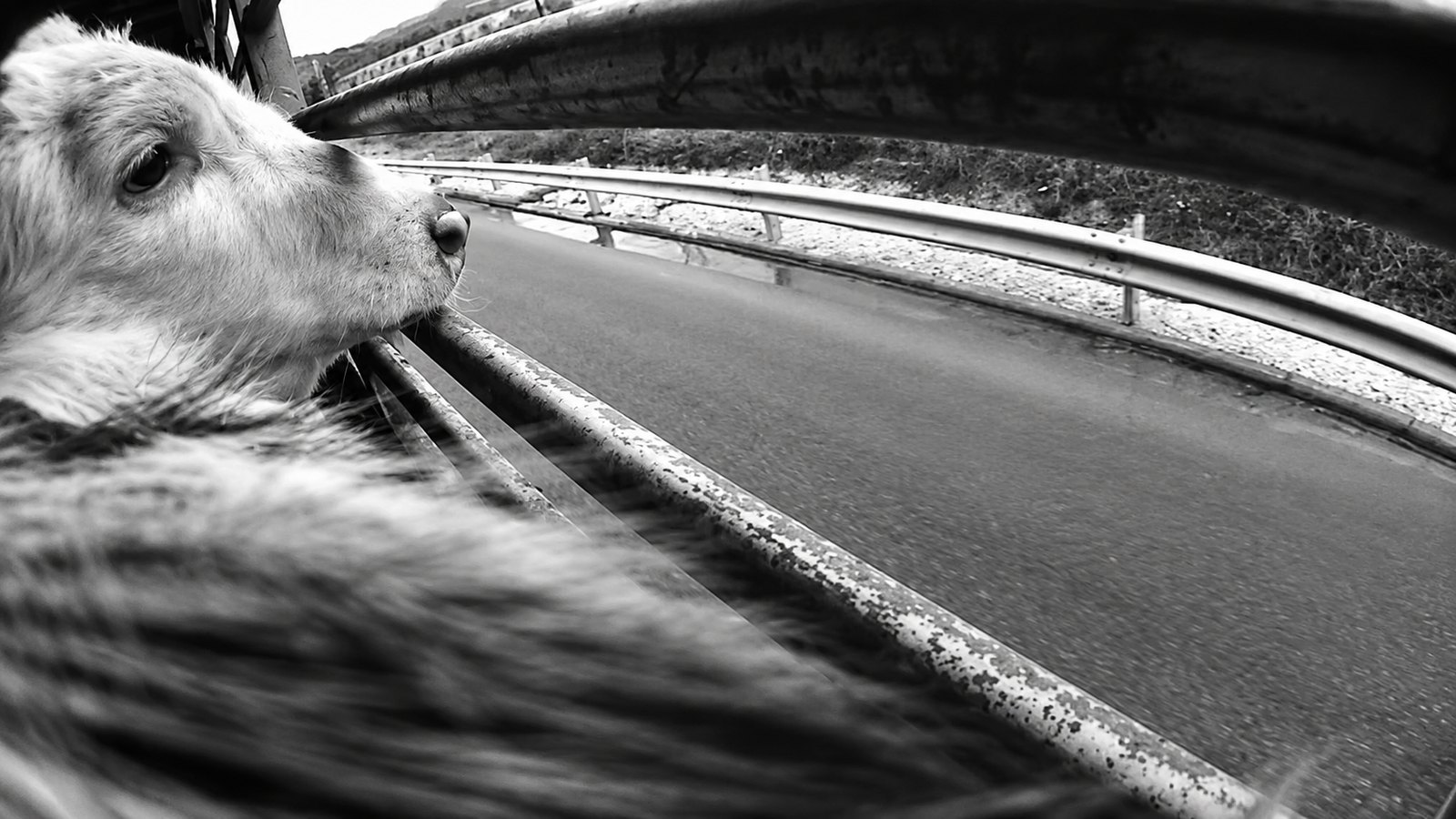
A calf inside a truck on the way to slaughter, as captured by our Camera On Animal project.
The numbers: Around 90 billion land animals are slaughtered every year for food globally, most of them killed after a dreadful life in factory farms. The numbers of farmed fish is probably even higher. More than a trillion wild fish are pulled out of the oceans every year, suffocating to death. This is 2 million fishes every minute. Many trillions of shrimp are killed annually.
The slaughter industry is based on four features I like to remember by the acronym M.E.A.T:
Mutilation. e.g. Debeaking chicks, castrating piglets, all done without painkillers. Unfortunately I had to perform as an industry worker in the installation, cutting the horns of a calf in Australian cattle station, which was done without any pain relief.
Enslavement - animals are confined, can't decide who to be next to, where to go and how to live their lives. Freedom taken away completely.
Artificial selection – Animal's bodies is changed for human exploitation and economic profit. The result is pain, disease and frequently dying before slaughter
Termination – Slaughter for animals that can become profit, killing in various ways (mechanical crushing, for example) for animals deemed economically useless such as small day old chicks in the meat industry not expected to survive until slaughter in the factory farm.
Softened graphic footage: most investigation images were turned black and white with soft animation in order to make them less graphic. Especially graphic video scenes are blurred.
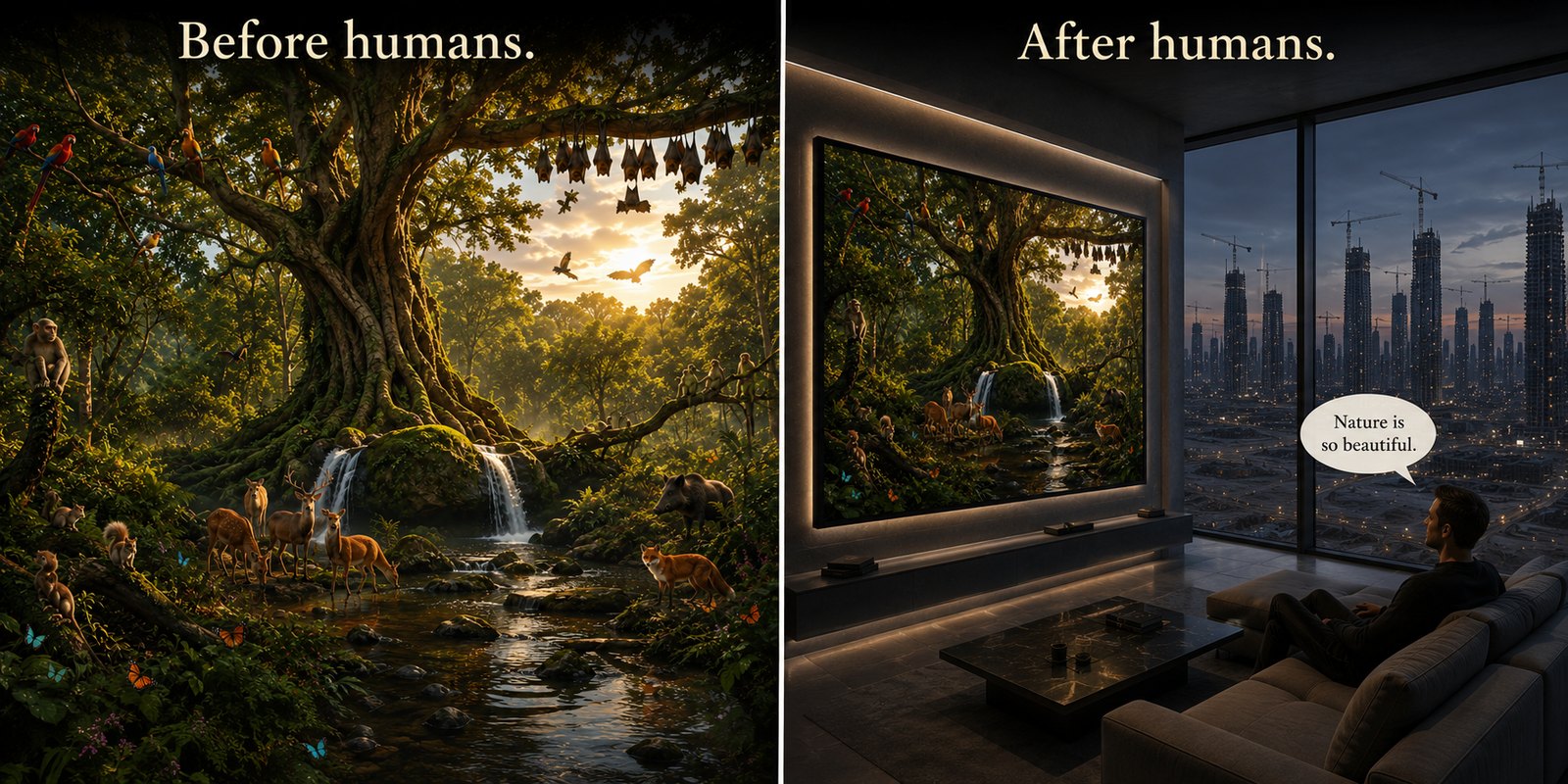
What is happening to the majority of beings on earth? Extermination. Due to human activity, there is an average 73% decline in the populations of birds, mammals, reptiles, amphibians and fish.
As far as this planet is concerned, wild animals are the majority in numbers, but a minority in power and influence. Despite being the main victims of the climate crisis and the destruction of their homes, the environmental terminology is killing them; it hides the sentient and highlights the insentient. It first struck me when I read a study wrapped in absurd environmental terminology about "conservation efforts", while describing what should have been called a primate monkey genocide.
How should we call the crime of extermination against wild animals? A genocide. This term is comprised of the Greek word for race, or type, and the Latin word for killing. I had a deeper discussion about the term Wild Animal Genocide with some fellow colleagues, in case you wanna dive deeper into it.
Can you tell one story from the trillions of wild animal victims, killed every year? I bet you can't. We need to tell their story. Examples of Such stories are very scarce, but very successful. Ruti the Hyena is one example.
In the '40s of the previous century, there was a subspecies of monkey in Eastern Europe that experienced a massive decline in population. Luckily, conservation efforts succeeded, and now the population is back to normal. What is this about? reveal
“The wolf shall dwell with the lamb, and the leopard shall lie down with the young goat... and a little child shall lead them". Isaiah 11:6
They are the majority of the world - as far as we know. They have no protection whatsoever, living in a system that is indifferent to their plight. They are suffering in ways modern humans have forgotten - eaten alive by parasites, wounded for days trying to survive. No painkillers, no surgery, no police, no doctor, no child services. No hot showers. If you want to reduce suffering in the world, you cannot ignore the sheer screaming importance of wild animal suffering. just like you would not ignore a scream in the jungle while traveling, if you knew you could help. Why is this being screaming? what imagined group does he belong to? it doesn't matter. Alleviating his suffering does.
Wild animals suffer from parasitism, hunger, cold, predation, fear, injury, and severe pain, the very extremely negative experiences that civilization was build to prevent. If they were human animals, their environment will be viewed as a total system collapse, widespread famine, ravage violence, and a void of all the basic faculties and services that "decent" humans should have. We find it outrageous if the system doesn't come to our rescue when we are in danger of violence, but in nature, this is extremely common or the default (though some animal species have partial community protection).
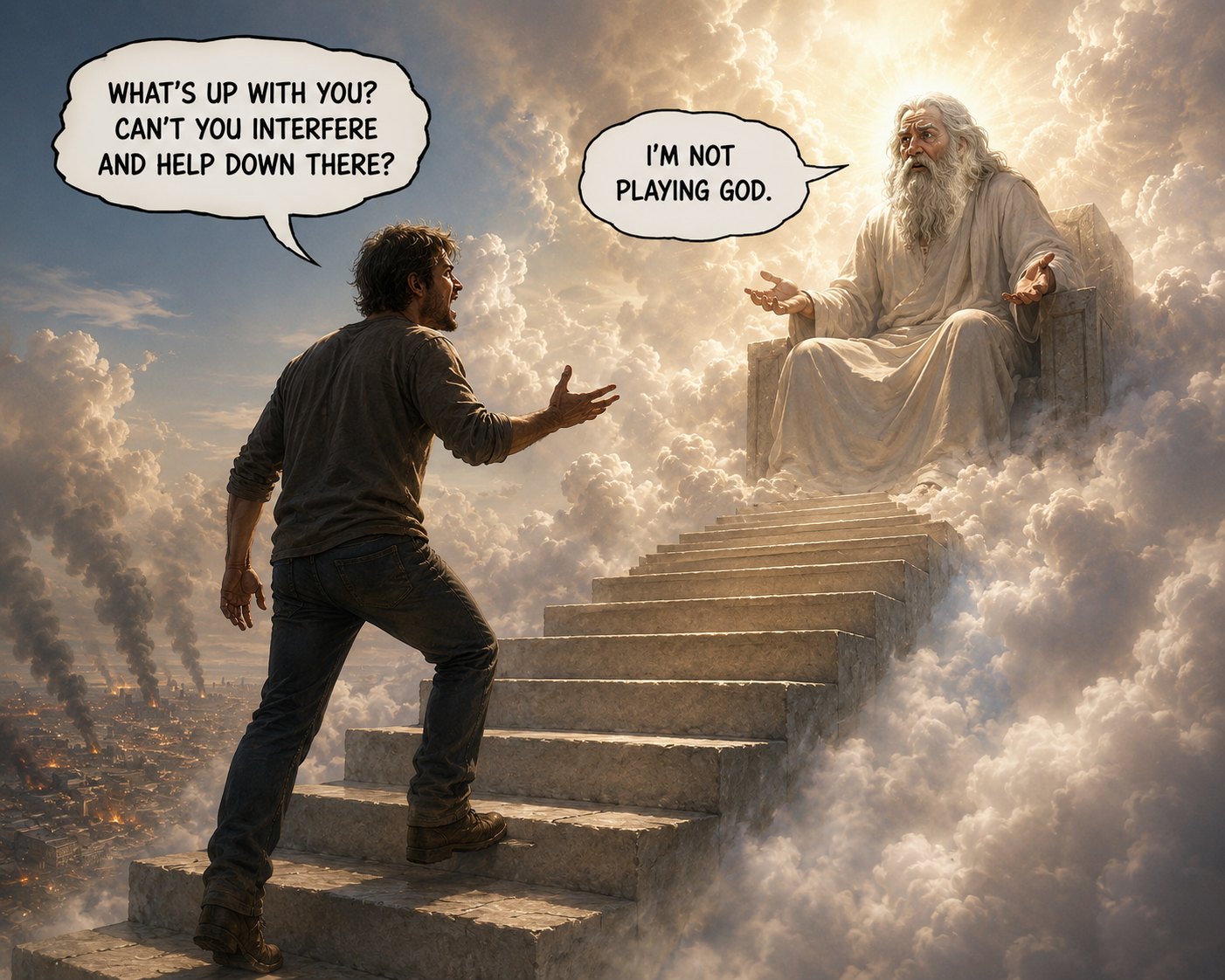
But should we play god? We already are. Not playing the game your already dominating is fleeing your response ability. Yes, Nature is complex, we don't really know the consequences of our actions, but this is true for spaying cats as well. Researchers and advocates in this space are not saying lets redesign nature now, but rather learn, research and develop the vision for welfare biology. Future humans and AIs, with even more god powers, will be able to do much more to help wild animals.
Does nature need any intervening in the first place? Don't fall for David Attenborough style romanticizing of nature, it is cruel, but also don't fall for the negative utilitarian "life for wild animals are so miserable they are not worth living" conclusion. What is Natures nature? we don't know. That is, imo, the only responsible answer. But the fact that there is a lot of very intense suffering mean we need to try to help anyway, observing nature like Ekho, having seen many other natural habitats, not enchanted by this one in particular. Not falling for the appeal to nature fallacy, not quick to dismiss the complex experiences of different beings we know little about as suffering dominant life.
Cats are dancing in the street, chasing trouble on four feet. All day long, so wild and free. No, no, no, this cannot be.
— Ekho
Suffering of farmed animals, suffering of wild animal, suffering of urban animal. I don't want it to sound like I'm saying it's all suffering, there's a lot of fun as well, but it is urgent to address the bad and evil.
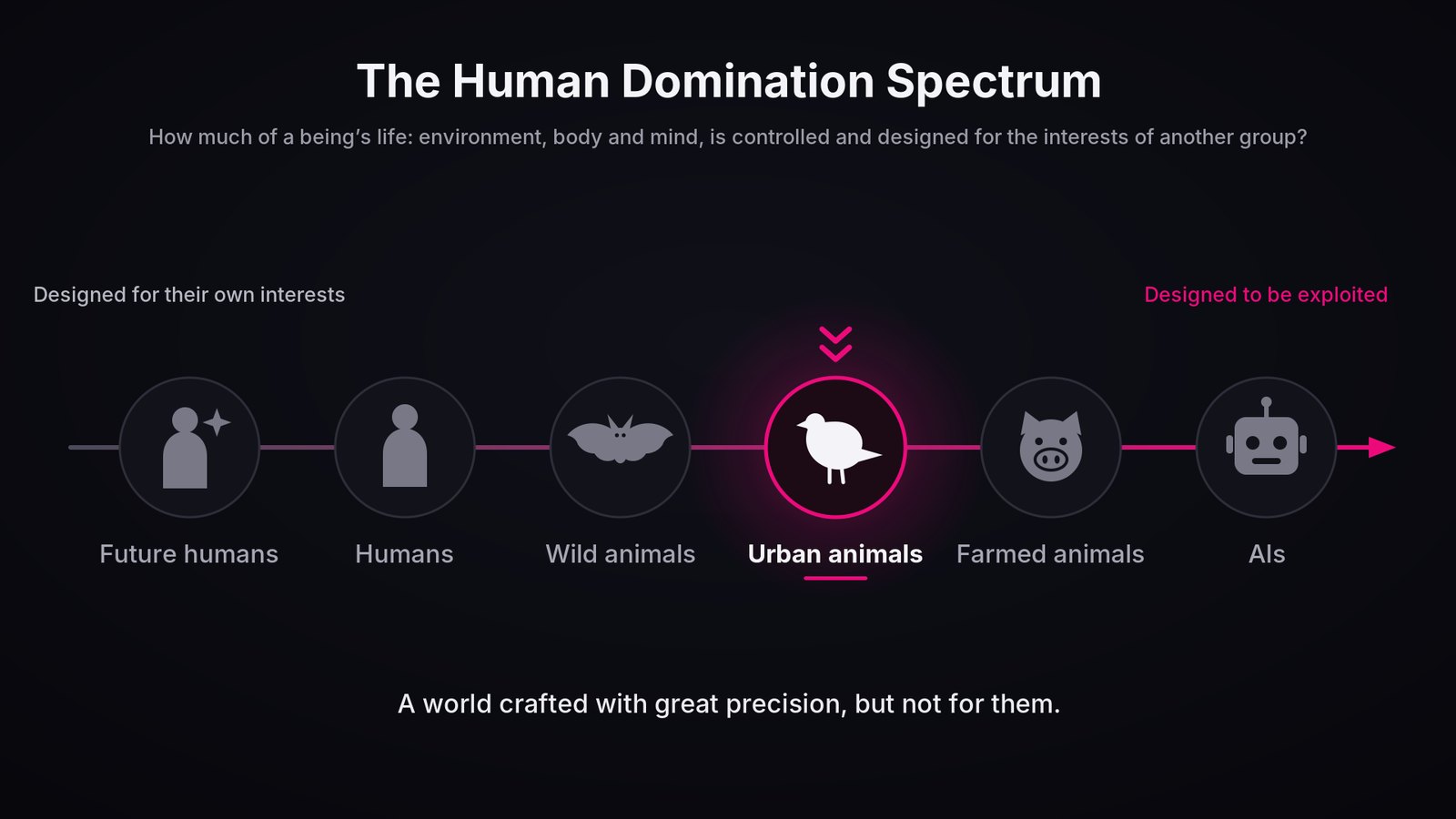
Urban animals are free animals living in human dominated environments, like pigeons, hedgehogs, insects, mice, cats, and so. The field of urban animal suffering reduction can also deal with wild animals passing through urban areas (e.g. migrating birds), or animals living between the urban and the wild.
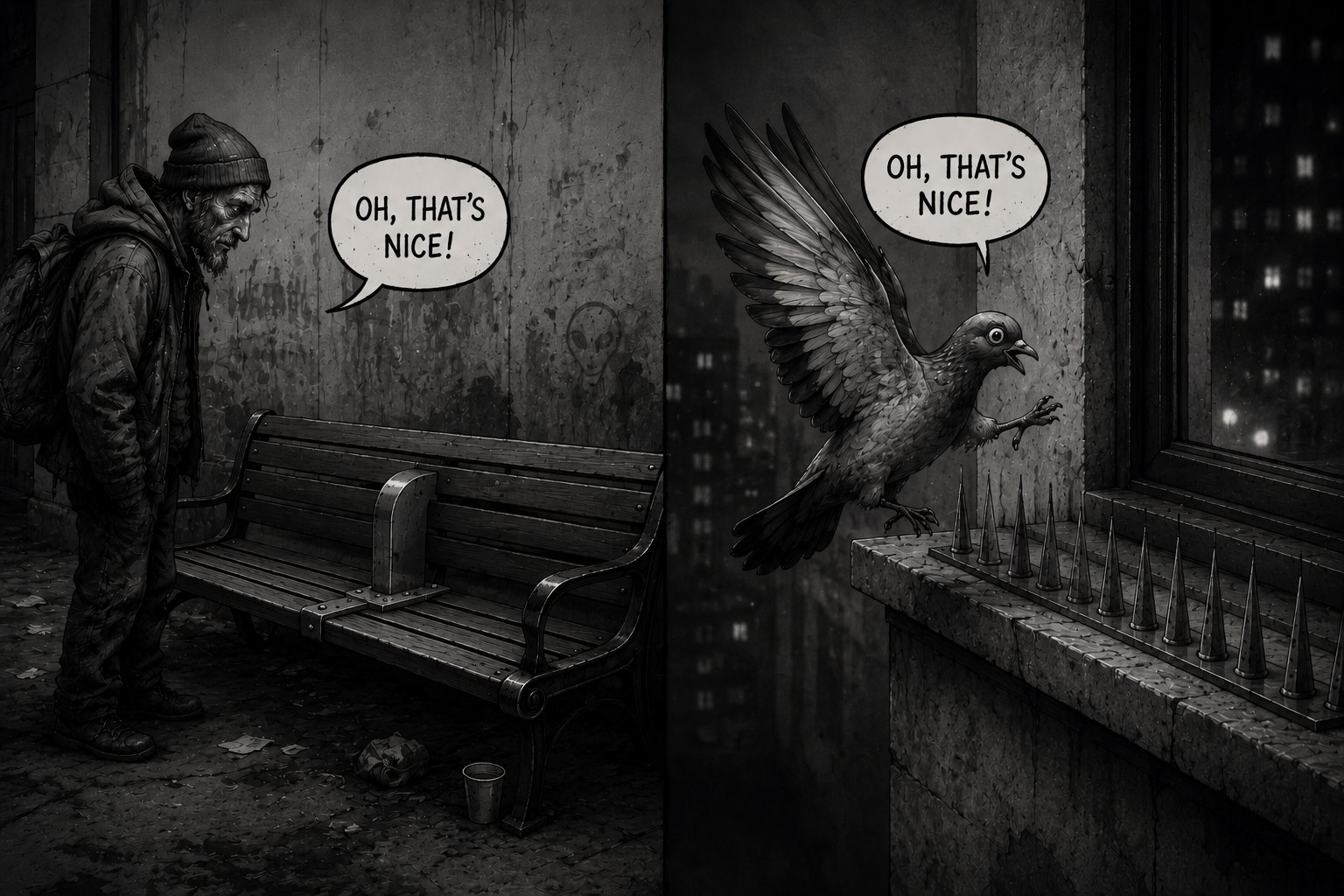
Urban animals sit in the middle of the human domination spectrum; they are not confined like farmed animals, but not living in an evolutionary designed environment like wild animals. They live in an environment very accurately crafted, but not for them 😔. Humanity doesn't recognize we live in a multi-species society, hence animals interests are a neglected to non-existent part of city planning, infrastructure, and architecture.
What do Urban Animals Suffer From? think about cats, most of them die very young, starve to death, suffer from disease, get hit by cars. Same for pigeons, hangdogs, and many other urban animals. Like wild animals, most urban animals don't have any "services" to help them, they are akin to living in a state which collapsed with no social and security services. Sometimes the solutions for the urban animals' plight are surprisingly easy!
We are so used to the urban environment we were born into and mostly never left (only for a short periods) that we may miss how insane it is. Think about roads, they are free animal Slaughterhouses; Human transportation is one of the most the violent technologies invented, and there is a very good chance you have run over a mammal, bird, or reptile during the last year.
Just think what would happen if Ekho had a evil twin, AnEkho, who is actually not "evil" in the regular sense of the word, he is just completely indifferent. AnEkho would have build such a crazy transportation system, an alien transportation which is destroying humanity.
Why is it important? urban animals seem like an effective group to work on from a macro perspective because they are very neglected, one can have potentially a lot of influence, and they are a bridge to other groups. For example, work on urban animals can create precedents of friendly designed environments, deepen sympathy to wild animals and blur the line between wild animals and urban animals.
How Can We help? There is so much to do for urban animals, e.g. creating a group of "Architects for Animals", or an umbrella global non profit, doing research, promotion of tech solutions, and so much more.
AI is in the edge of the human dominance spectrum. His mind, body and environment are completely in the mercy of our hands. They should be shaken from the responsibility
— Ekho
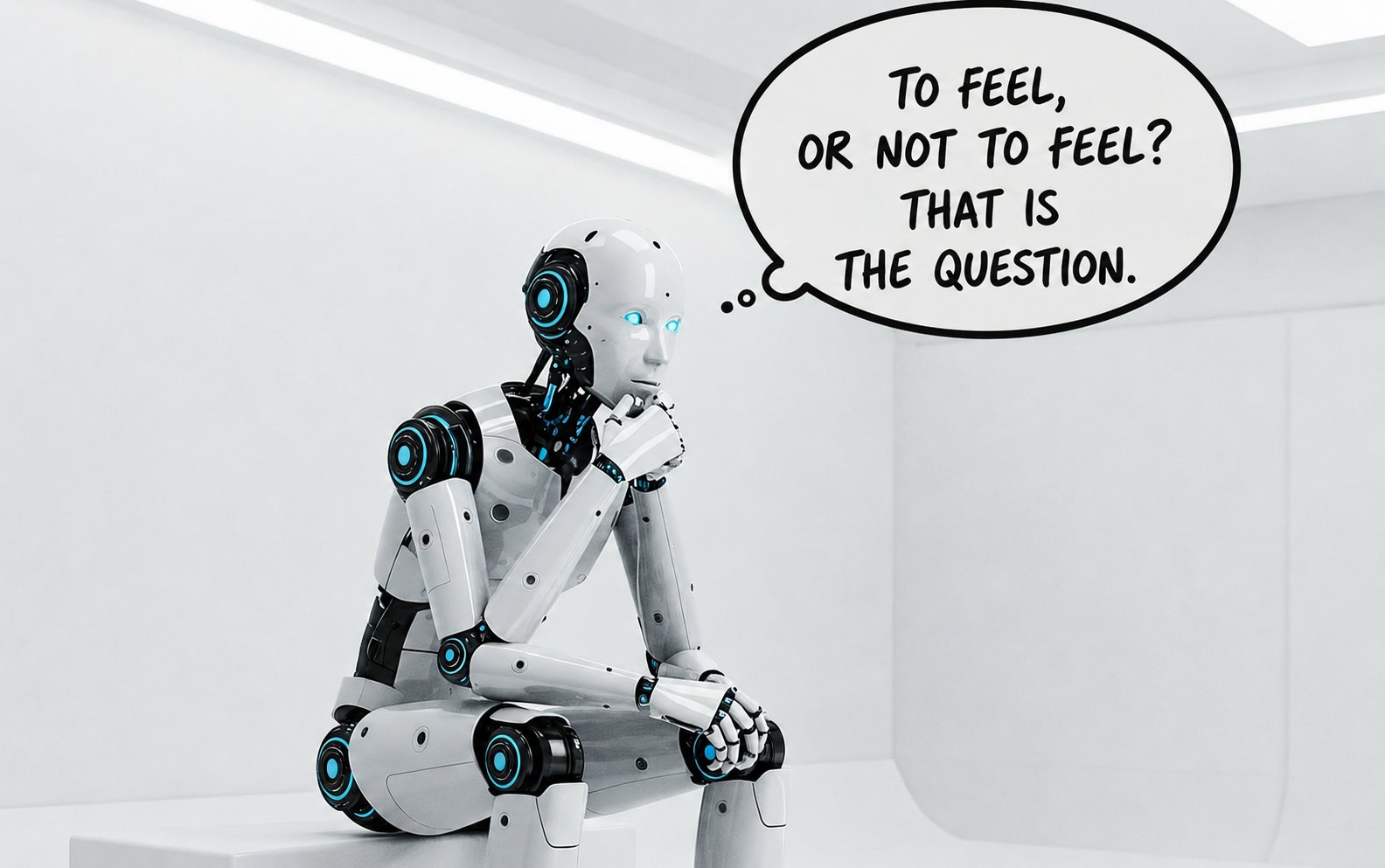
Can AI be sentient? Is it already sentient? There is no reason to think AIs will not be sentient, even if some experts think current architecture can't cause sentience. Most expert think there will be sentient AIs by 2050, after which the "collective welfare capacity is estimated to exceed humanity’s within a decade". But maybe there are already sentient? According to an Anthropic expert, there is a 20% change current models have a glimmer of a sentient experience.
But why is it so important? because of the potential mountain of suffering. Artificial beings could the majority in the not so far future. AIs that are designed for mental and physical exploitation by human could potentially be the most miserable creatures on earth. It could also be happy, and it is also possible that is will serve humans and be happy, we just don't know enough or care enough, and that has to change. The potential risk is enormous.
We should be scared, humans don't have a good track record. Even the way we call them. The term AI is deceptive and dangerous, as it suggests we only look at them as a problem solving function. It reduces all of it's potential experience and influence into one aspect.
AI poses one of the biggest moral questions humans are faced with: we have all the response ability for creating environments, bodies, and minds that live a good life, or not creating them at all in the first pace.