Undercover investigations is a type of activism that doesn't fit most people. I present my work here as an example of my thinking, my mistakes, my advantages, in hope this could improve your generation of ideas, prioritization, or execution.
My endeavor to expose the slaughter industry focused on:
Developing the genre of Through Their Eyes investigations, to promote the more vivid and realistic simulations of the global majority inside our civilization
*If you are interested in helping with undercover work in India, Israel, or globally, please contact me.
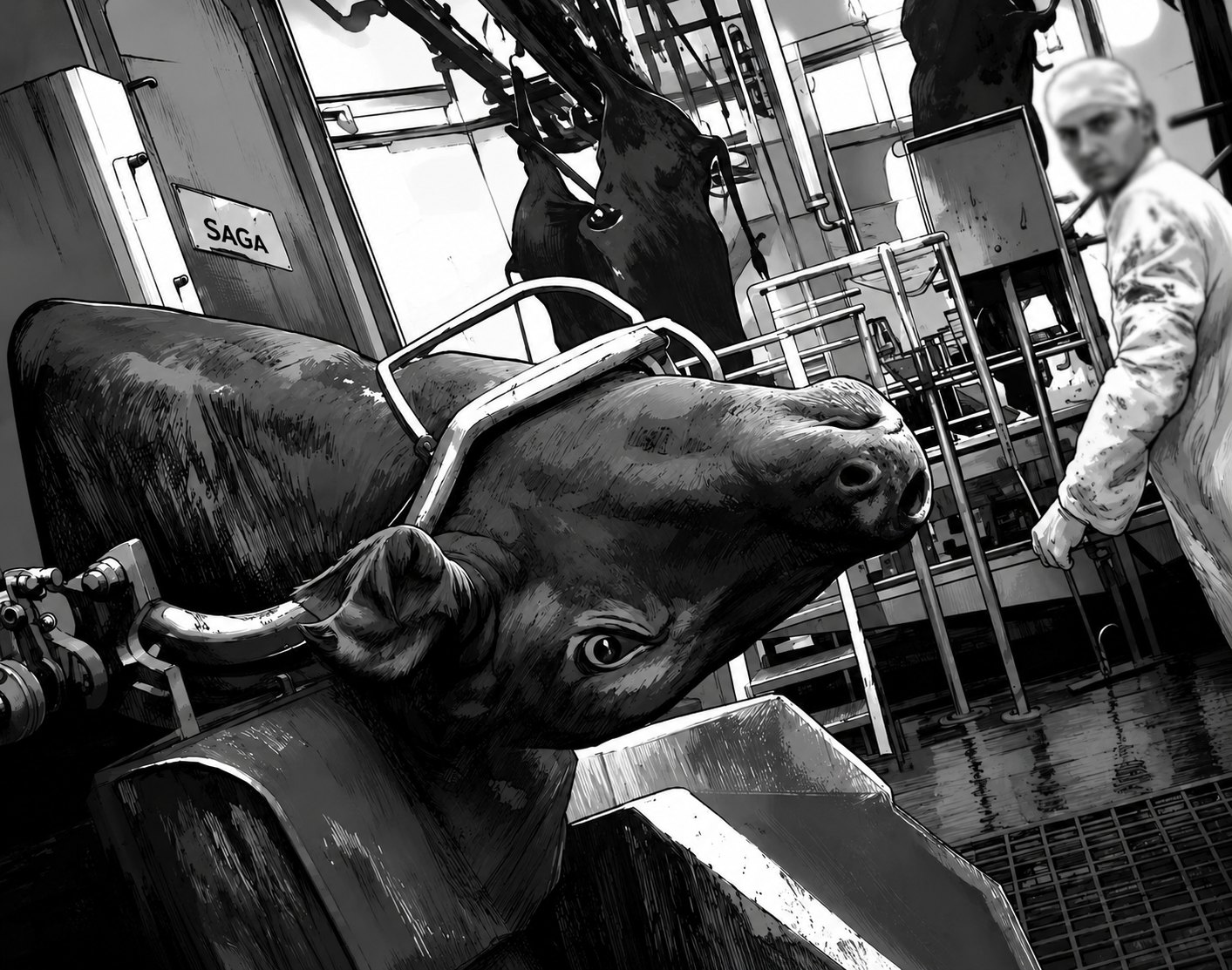
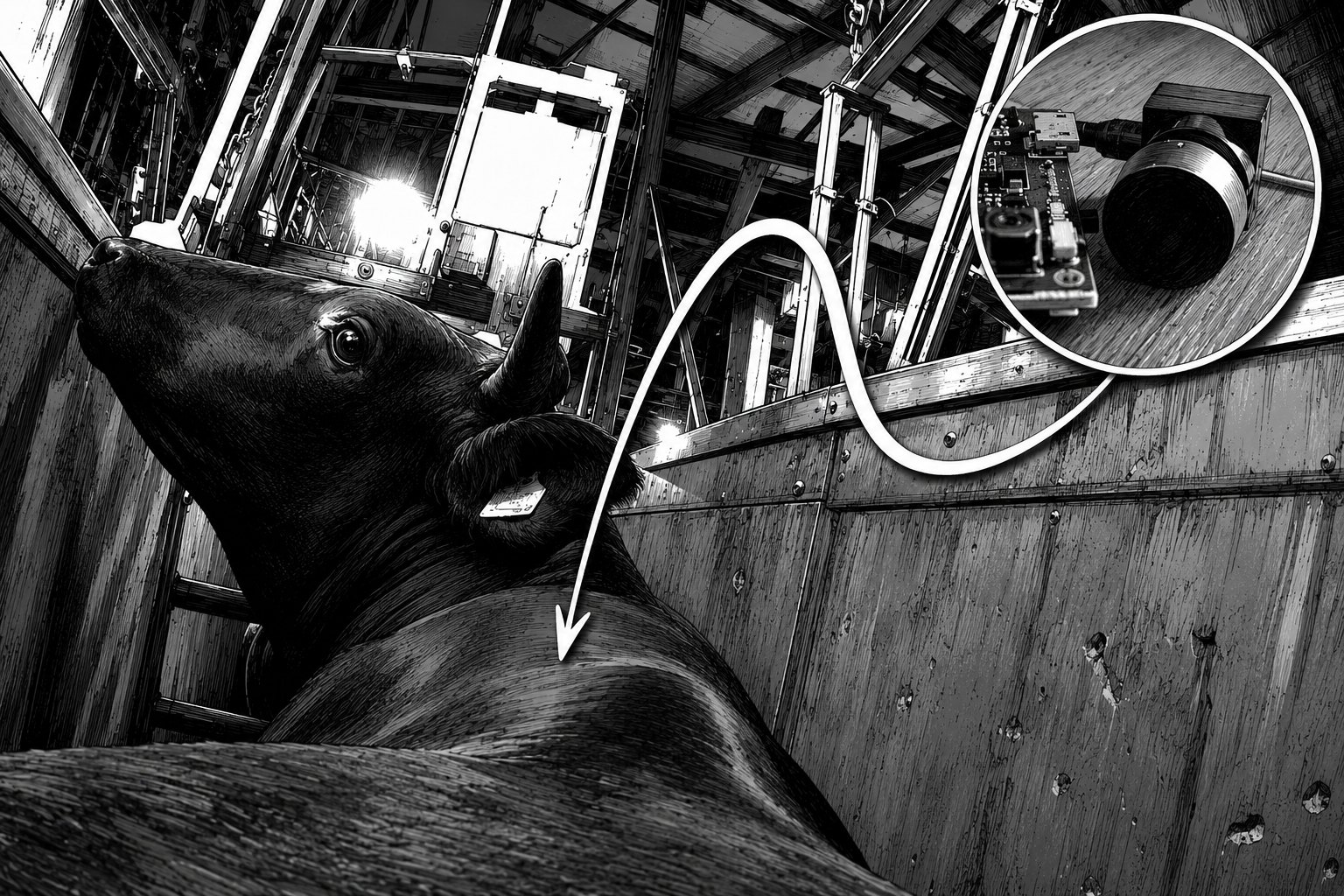
Softened graphic footage: most investigation images were turned black and white with soft animation in order to make them less graphic.
Where there’s a will, there’s a way, till reality has its say
— Ekho
There are three pillars of activism, only 3 things I need to get better at: creating a pool of questions or answers, prioritizing them, and execution (which is a very thin layer). Here is an example of how those pillars play out in one particular project. I view my failures during my impact career in light of these pillars.
Failures are so underrated. Hearing stories about them is more important than about successes. Luckily, I have been blessed with many failure stories 🙂🙂 I will tell you the how and try to analyze why.
My achievements are so much sweeter in the company of failures, or are they?
Good management stands on excelling at human resources work, fundraising, strategic process, and a good system; knowledge management, rituals, tools. I try to get better at Systems Thinking.
To understand and share what farmed animals are going through in Israel, a culture of investigations, a tradition of undercover work, which was almost non-existent, needed to be created. Together with wonderful colleagues from Animals Now, I founded and managed the investigation team that pioneered investigative journalism on farmed animals in Israel, making it a tradition continuing for more than a decade, and still ongoing, albeit recent years has seen massive decline in all Israeli animal rights activism, including investigation.
Examples of investigations I executed as a "regular" worker in slaughterhouses:
A story about the biggest mammals slaughterhouse in Israel (at the time), Adom Adom ("red red"), which belongs to Tnuva, the biggest Israeli food company. Here is the story on ABC news Australia, it contains graphic footage. This was my first undercover in a slaughterhouse (or any factory farming), and I worked there for a month and a half, some of the time along with a colleague.
It was probably the most influential TV investigation in Israel in 2012, generating a public outcry with hundreds of follow-ups.
It was the basis for the first criminal conviction on farm animal abuse in the country
It elicited class actions bringing millions of shekels to farm animal organizations
Helped boost the animal rights wave in Israel
What made this investigation a viral hit? The blend of a huge food brand, a slaughterhouse footage never seen before by the Israeli public, a TV show host with a very macho and "non vegan" appearance, and public interest that has already started to gather up for the subject.
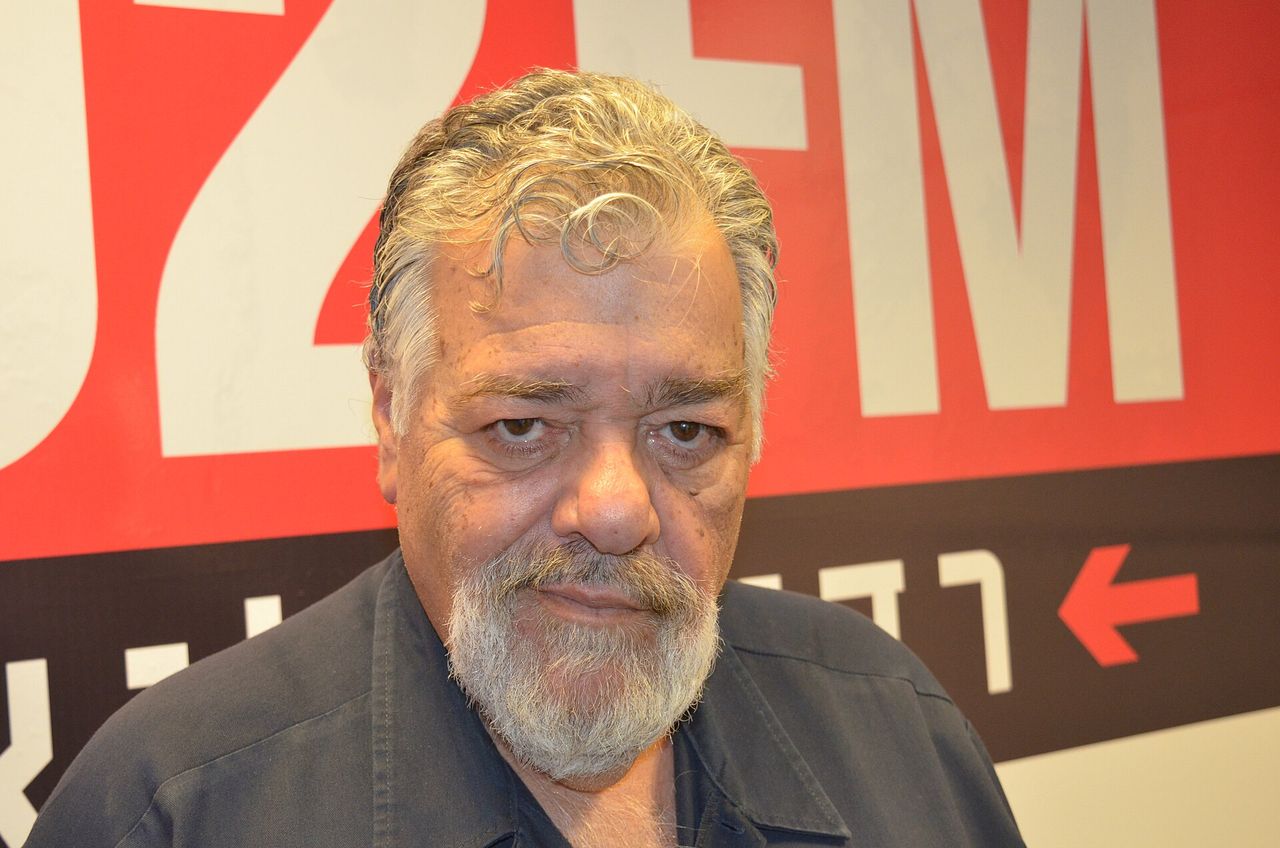
Rafi Ginat, who was host of the most veteran Israeli investigative show, where the slaughterhouse footage was published.
This is a picture I took in the slaughterhouse (turned black and white to be less graphic). In the final moment of this animal, I felt the total domination of the system upon him taken to the most extreme. He can't even express his fear, everything is still. Only the eyes keep blinking with terror.
A story about a chicken slaughterhouse of the biggest sausages and deli meats manufacture in Israel, called Soglowek. Aside from working there undercover, colleagues and myself filmed the inside from the outside, hiding in the bushes with long zoom cameras. The recipe was similar to the first mammal slaughterhouse investigation: a major food brand, same TV show, same formula. It worked again. The president of Israel at the time became vegetarian after seeing this investigation.
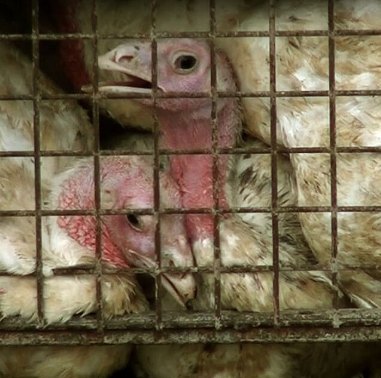
A picture from the chicken slaughterhouse investigation
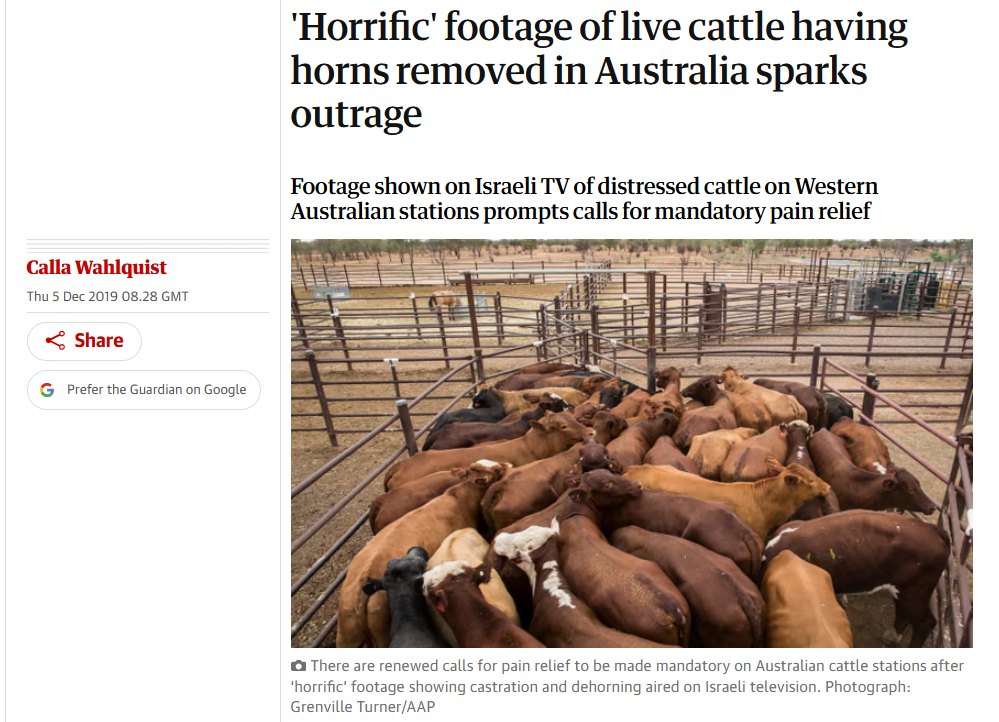
I worked with a colleague in several Australian cattle stations and a slaughterhouse, exposing the "humane meat" myth through a widely covered investigation, resulting in major Australian cattle producers implementing pain relief while dehorning. The story was published in prime time media in Israel and international media, with coverage including The Guardian, creating corporate policy changes and sparking outrage.
The guardian headline about the investigation
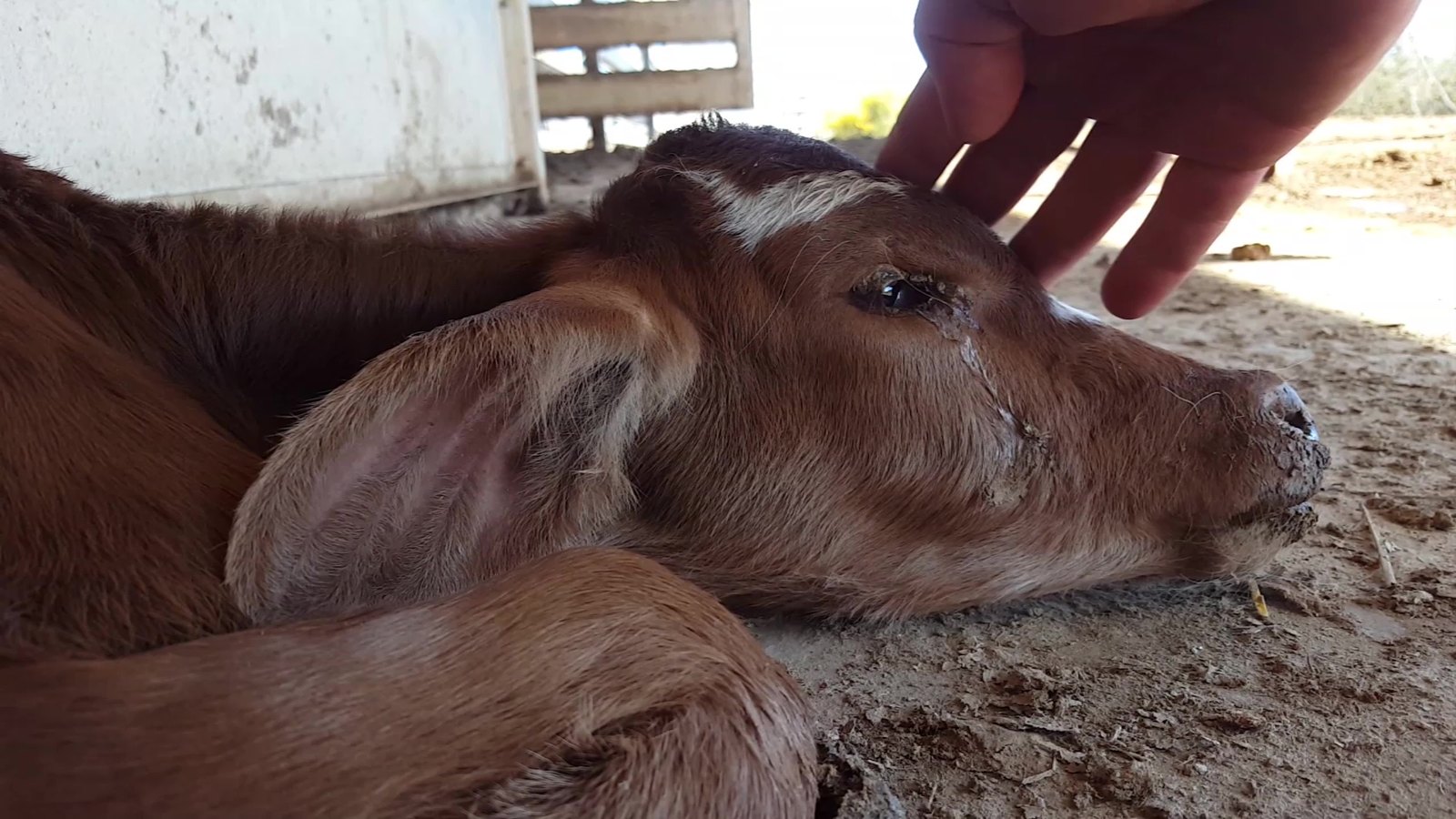
I will always remember Kylie, a calf who died in our arms on the cattle station. Watch his story here.
A common thread through many investigations we conducted was showing reality through the eyes of the animals, not the investigators. This allows tens of millions (or probably more) of people exposed to our work to better understand and simulate what those animals are going through:
Through the eyes of chicks in their first day alive. Published by many animal rights organizations around the world, it amassed to more than 50 million views on social media, and also published in tens of outlets worldwide
We followed many individuals, and each and every one was given a name
We have disseminated this method to other activists globally, sending cameras and giving lectures on the method, e.g. at the international animal rights conference
The more general concept of animal storytelling, from Tom (the bull we followed) to Ruti the hyena, is explained in this talk I gave at the Animal & Vegan Advocacy international conference
In this podcast I talk about the Camera On Animal project with the animal activist David Ramms (and a bunch of other animal stuff)
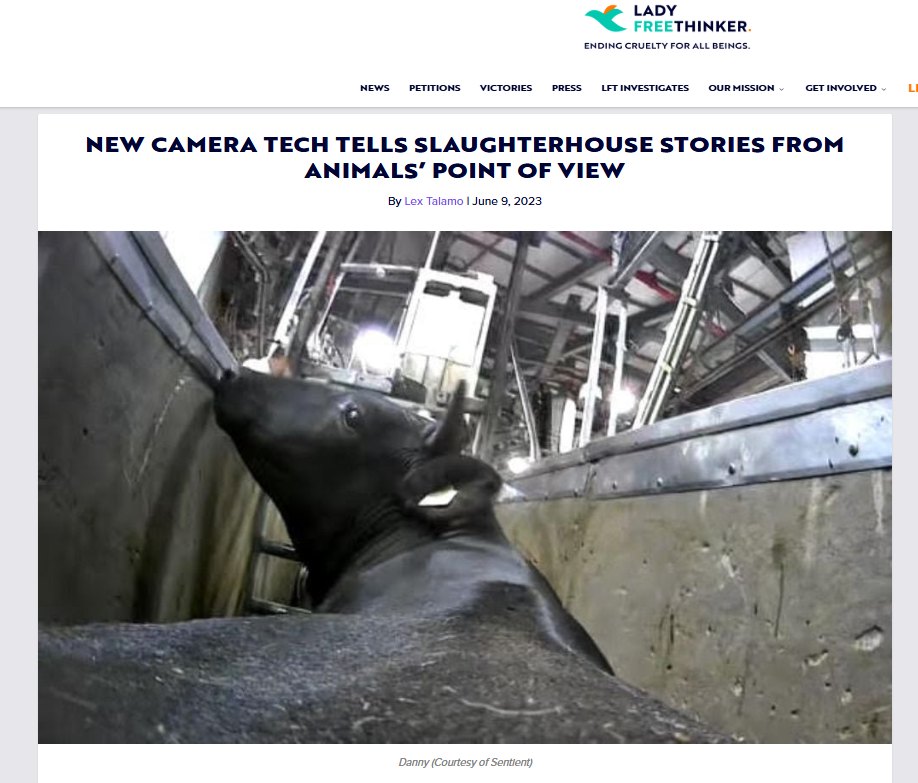
An internet publication on the camera on animal technology
To have an impact beyond a specific time and space, highlighting the global majority group in our civilization (farmed animals), we at Sentient have created tools to serve the investigative community and us. Examples:
Camouflaged 360 Camera: The first ever investigation (as far as we know), on any topic, to use undercover footage from a fully hidden 360 camera. Careful, very graphic footage!
My team and I at Sentient, which I have co-founded and managed for 8 years, conducted investigations worldwide (e.g. 'Heifer International' Exposed). Afterwards, Sentient shifted to helping the global community of undercover investigators . Among our services: investigation 101 course, knowledge hub, peer to peer support, webinars, and creating spytech for investigations. We have been inspired by our friends at Reporters for Animals International , doing great work to empower investigative activity worldwide.
At the beginning of 2025, I stepped down from managing Sentient into an advisory role. In the leadership of Abhishek, Sentient continues to help investigators worldwide, while focusing on India, where such work is very neglected. When we started working there, there were no full-time undercover investigators for animals in all of huge India! We hired the first one.
Played a significant role in Israel’s “vegan wave” of the 2010s
The investigations and their outcomes were published in Israel and internationally, triggering nationwide public debate with hundreds of media follow-ups
Outcomes include legal action, legislative changes, and the formation of a special government committee. Criminal convictions followed, setting new legal precedents, including the first ever conviction for farm animal abuse and successful class-action lawsuit settlements yielding more than $2 million USD for animal protection organizations. They also contributed to a decline in meat purchases from major food brands
The investigations supported a campaign (I initiated and managed), that successfully stopped a governmental reform aimed at increasing chicken slaughter in Israel by 10%
Creation of a “landscape of fear”, making abusers afraid of being caught, tried, and deprived of their killinghood.
Steering towards anything, from going to the bathroom to winning a Nobel Prize, stands on three different "moods":
The creator. Creating a pool of questions or answers, which are both ideas. Ideation and creativity strengthen this
The Prioritizer. Choosing the ideas for execution. This could be a combination of several of them (though thinking about blends of ideas could be done in the previous stage as well), parts of ideas, and different investment effort into different ideas. Analytical thinking, bias mitigation, and tools like Weighted Factor Model can strengthen this. Prediction capabilities are of most importance.
The executor: It's a bit tricky to define what exactly execution is, because usually after the prioritizer and the creator stage, one goes back to the prioritizer mode again. See this example for more details. I define this stage as a robot stage, unaware, uncreative, unopen to change. only automatic actions based on prior work are needed. Strengthen it by attention to everything you decided, focus, and calm. Those things depend mostly on the result of all the Q&A and prioritization you have done before in your life: your working system, your inner investigation, your knowledge and skills.
Order, standing on the shoulders of your prior self, really helps with creating pool of Q&As. I could do this website since I have developed a knowledge management system, a second brain, for several years
The creator and the Prioritizer are very different modes, as different as can be. Ideally they should be done separately, on different days and different locations
Many People skip first and second pillars, leaving it to the automatic mental processes that are outside awareness. If you start from the third pillar, you live in the world of answers. It is important to often visit back the world of questions, it is what opens up new doors. One way to do that is to ask questions about the questions. This ensures you're in the questions world.
Creating pools of ideas, questions or answers, is an ongoing process. If you don't have an idea list, or you plan to start one at a later stage, you're doing something wrong
Getting better at those three pillars is the only thing you need. In my opinion, that's it.
let's say you're organizing a conference on urban animals. You created a pool of questions: who is the target audience, when should the conference take place, and so on. So the process is you had a pool of questions, and let's say you have prioritized one of them, the target audience. Now you go back to step one and create a pool of answers to the question "who is the target audience": architects, local politicians, wild animal activists, environmentalists, comedians, welfare biology academics, crazy cat people, and so on. You decide to prioritize activists, academics and three local politicians. Now for execution: how should you invite them? It goes back to a pool of options: Post on social media, a newspaper ad, a private message etc. When you're writing the private message, that is the execution, but actually this also goes back to the process of creating a pool of questions and prioritizing them: what opening would get him excited? Like AI, you can think about every next word as a pool of options you create and prioritize from.
Obviously many of these processes are subconscious and automatic, and many Q&As are being prioritized and answered without you even being aware of it. It is good, and I think it is also good to be more aware of what we are not aware of, so we can tweak it a bit.
So where is the execution part? I think the best way to define execution is where you have no pool of questions or answers in awareness, you just focus on what you already decided to do, without any creation or prioritization. You've decided you are going to call the vice mayor of your small town to personally ask him to give the keynote at the conference. If in the middle of the call you think "what should I say now, it is going really bad and he doesn't understand how this could help him look better in the eyes of animal lovers", you're out of execution, because you're now creating a pool of answers to a raised question and prioritizing them.
So I define execution by absence: It is only following orders, no thinking. "The robot" state: unaware, uncreative, unopen to change. A skilled performer adjusts constantly without any question reaching awareness, so if it is automatic, you're not stepping out of execution. Intervention in your own process is what makes you step out. An emotional intrusion like fear, ego or fatigue can get you out of the robot state. Turning awareness onto ones own execution can make skilled people choke, so awareness is not always to the advantage. The target is not to maximize it, but to calibrate it, fine tune it, which is in itself a trained skill.
You can be an executor in certain aspects but remain creative in others. For example, be in a robot state while reading a speech, but creative in reading the audience's response, though not changing anything you say.
Questions for you: When are you in an executor robot state of mind? When do you need more of it, when do you need less of it? When are you too much of a creator? When are you too much of a Prioritizer? You can analyze yourself in light of those three pillars and questions.
Idea generation: I am good at generating pools of questions or answers. I have a broad superficial knowledge on many issues and go a bit deeper in some domains. I am a generalist, and I am OK, sometimes even good, at many things: I can write, lecture, fundraise, manage, go undercover, investigate a new issue, hire the right people, and more. Not exceptionally good on any of those, but between OK and good. Yet, in hindsight I understand I wasn't broad minded enough in my first ~13 years of activism. I didn't read books on social change, I hardly knew anything about AI, and I was only familiar with Effective Altruism's philosophy in a shallow way.
Prioritization mistakes, mostly in predictions:
Too optimistic prediction, sometime related to falling in love with my own ideas, not getting enough feedback for those ideas, and not working with prioritization methods (like Weighted Factor Model). Introspection, specifically meditation, helped my prioritization. One specific prediction mistake is I didn't expect the downfall of the Israeli animal rights movement, which started around ~2017 and escalated. I didn't prepare for that
I have very basic statistical understanding. I know correlation is not causation, I understand just a bit about Bayesian reasoning, but practically not much more than that
I Didn't do enough checks before prioritizing a project. The Camera On Animal was hardly used by other activists, and the whole broader Spytech vision we had didn't pan out like we wanted to. It wasn't suitable for our budget, the community needs, and the willingness of investigators to put effort into new tools. I had a mistaken inclination towards what looked shiny, exciting and new, something that sets a precedent, over simple and practical. Our best Spytech project this far came from the most common request investigators had and it was very mundane; just a regular camera that combines different features that were not there in the same product
When the people you depend on, like journalists, don't want the main course, the essence of the story, then the "confetti" - such as a creative angle, a very high quality footage, or an interesting framing - can only help so much. If they don't want to tell the story of farmed animals, the decorations on a direct story about farmed animals have its limits. Sentient's first undercover investigation used a 360 undercover camera, insane HD footage from inside duck slaughter cones, showing animals alive after the slaughter. The success of this story depended more on the general willingness to tell the story of a slaughterhouse in the first place, than on the unique materials we brought. Getting creative within a narrative is enchantment, not a game changer.
And now, achievements. I recently started maintaining a document of clear successes , and I think more activists should do so, it helps and motivates. Here are the main things I wrote in it:
Mind:
Creating the investigative space for animals in Israel by founding investigation teams, doing undercovers work myself, and inspiring other orgs to do it. My work helped bring the subject of slaughterhouses into the conversation in Israel via major high profile investigations, and subsequently bring more money and people into the movement
It was part of the "vegan wave" that swept through Israel during the 2010s
It helped reduce some of the suffering for farmed animals, due to regulation change, legislation, corporate policy change, creating landscape of fear, and more
Social media education, reaching hundreds of millions of people (100M minutes views of our videos only in 2022-2023), helped change hearts and minds for more compassion
Matter: Helped the alternative protein space grow in Israel
Reestablishing The Modern Agriculture Foundation, which has done many impactful projects including creating a project which turned into an alternative protein startup
Major cattle producers have implemented pain relief as a result of our investigation in Australia
Major change for the better in the Israeli Trap Neuter Return (TNR) landscape due to our investigation
Legal actions, legislative changes, and the formation of a special government committee. Criminal convictions followed, setting new legal precedents, including the first ever conviction for farm animal abuse and successful class-action lawsuit settlements yielding more than $2 million USD for animal protection organizations. They also contributed to a decline in meat purchases from major food brands
Repealed the reform that would have increased chicken slaughter in Israel. In practice, although we succeeded in stopping the reform, slaughter increased anyway due to complex industry dynamics.
Systems thinking is about the emerging properties in systems that are part of bigger systems. You can be productive without it in certain cases, but in order to be effective in achieving the ultimate ethical goal, I would suggest you need to look at the whole.
Without looking at the whole system, you just have a bunch of balls, each one rolling in straight lines. This website is part of my systems thinking practice, a distillation of my Second Brain in Obsidian.